
Planting
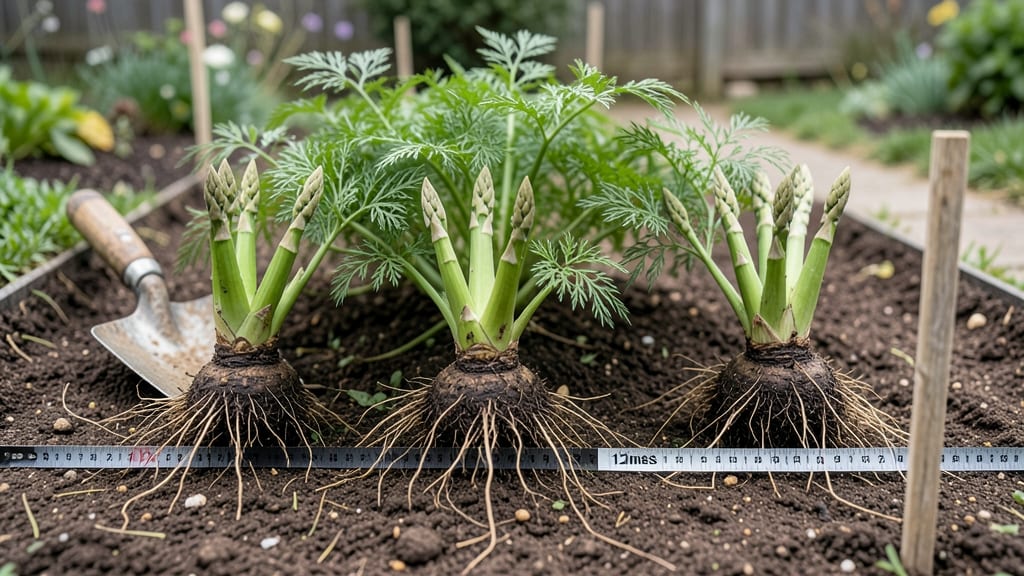
To plant asparagus the right way, spacing crowns 12 to 18 inches apart in rows 3 feet apart is the secret to decades of harvests—too close and you’ll choke the roots, too far and you’ll waste space.
Picture this: you’ve just sunk crowns into rich soil, dreaming of thick, spearing stalks next spring. But if they’re packed too tight, the plants compete for nutrients, stunting growth and inviting disease. Worse, overcrowding makes it nearly impossible to harvest spears without damaging the crowns.
This isn’t just about numbers—it’s about setting up your asparagus for long-term success. Proper spacing means better airflow, easier access for weeding, and a system that rewards patience with harvests for 15+ years.
Below, I’ll break down the exact distances for trenches, rows, and even seed planting, plus how to fix mistakes if you’ve already planted too close.
Ready to turn your plot into a high-yield asparagus powerhouse? Let’s dive into the spacing rules that will transform your garden from good to exceptional.

Optimal asparagus spacing by planting method: crowns vs. seeds
Asparagus thrives with the right spacing, but crowns and seeds require different approaches. Crowns—pre-grown roots—need 12-18 inches apart in rows spaced 3-4 feet apart, while seeds demand even more room. Poor spacing leads to crowded spears, disease spread, and reduced yields over time.
Why spacing matters: Asparagus plants grow wide roots and tall fronds. Trench planting (burying crowns 12-18 inches deep) maximizes root expansion, but rows must still follow spacing rules. Seedlings, slower to establish, need 18-24 inches apart to avoid competition.
For crowns, dig trenches 12-18 inches deep and place crowns 18 inches apart along the trench’s center. This method lets roots spread horizontally while keeping fronds upright. Row spacing of 3-4 feet prevents fronds from shading each other, which reduces spear production.
If using seeds, sow them 1/2 inch deep and thin seedlings to 18-24 inches apart once they’re 4-6 inches tall. Seeds take 2-3 years to mature, so wider spacing ensures they have room to grow without competing. Row spacing of 4-5 feet is ideal for seeds.
Proper spacing also reduces fungal diseases like rust and fusarium wilt. Crowded plants trap moisture, creating humid conditions where pathogens thrive. Well-spaced asparagus allows air circulation, keeping foliage dry and healthy.
In raised beds, you can reduce spacing slightly to 12 inches apart in rows 2-3 feet apart. However, raised beds require frequent weeding and mulching to prevent soil compaction. For container growing, use one crown per 18-inch pot with deep, well-draining soil.
After planting, mulch heavily (3-4 inches) with straw or wood chips to retain moisture and suppress weeds. Avoid organic mulch touching the crowns to prevent rot. Water deeply once a week during the first growing season to encourage root development.
For long-term yields, rotate planting beds every 3-4 years to prevent soil depletion. Asparagus is a perennial, so proper spacing now means decades of harvests with minimal replanting. Plan your layout carefully—once established, moving asparagus is difficult.
Remember: Trench planting is the gold standard for crowns, but row planting works too if you adjust spacing. Whether you’re a beginner or a seasoned gardener, following these guidelines will give you plump spears and minimal frustration down the road. 🌱
Common asparagus spacing mistakes and how to fix them
Even experienced gardeners sometimes struggle with asparagus spacing. Overcrowding leads to weak spears and disease, while spacing too far reduces yield. The key is balancing root expansion and air circulation—but many mistakes are easily fixed with simple adjustments.
Let’s tackle the top 5 spacing errors that sabotage your asparagus patch, plus step-by-step fixes to salvage your crop. Whether you’re dealing with uneven rows, shallow planting, or crowded crowns, these solutions will get your asparagus back on track for a bountiful harvest.
⚠️ Warning: Over-Planting Asparagus
Planting asparagus too close (less than 12 inches apart) creates a competition for nutrients and increases fungal diseases. Crowns need 18-24 inches of space to develop strong roots and produce thick spears. If your patch looks like a dense thicket, it’s time to thin!
Fix: Remove every other crown immediately. Space remaining plants 18 inches apart in rows 3 feet apart. Add compost to the soil to help recovery.
One of the most common mistakes is planting asparagus crowns too shallow. If crowns sit above the soil line, they’ll dry out and struggle to establish roots.
The fix? Dig a 12-inch-deep trench and bury the crowns with 6 inches of soil over them. This mimics their natural growth habit in the wild.
Uneven rows create gaps in sunlight and make harvesting difficult. To correct this, mark your rows with stakes and string before planting. Use a level to ensure rows are straight.
If your patch is already planted unevenly, prune back the tallest plants to create a uniform canopy and redistribute nutrients with a balanced fertilizer.
Another spacing blunder? Planting asparagus in low-lying areas where water pools. Roots rot in soggy soil, leading to yellowing fronds and poor spear production. The solution? Amend the soil with organic matter like compost or sand to improve drainage. If water still pools, consider raising beds for future plantings.
For established patches with overgrown foliage, prune back one-third of the fronds in early spring. This reduces competition for nutrients and encourages stronger spear production. Always use clean, sharp shears to avoid spreading disease. Mulch heavily with straw or wood chips to protect roots and retain moisture.
Finally, avoid the temptation to harvest spears too early in crowded patches. Wait until spears reach 6-8 inches tall and are tightly closed—this ensures the plant has enough energy to recover.
Use a sharp knife and cut at ground level to prevent damage to the crown. With proper spacing and care, your asparagus patch will thrive for 15+ years! 🌱