
Planting
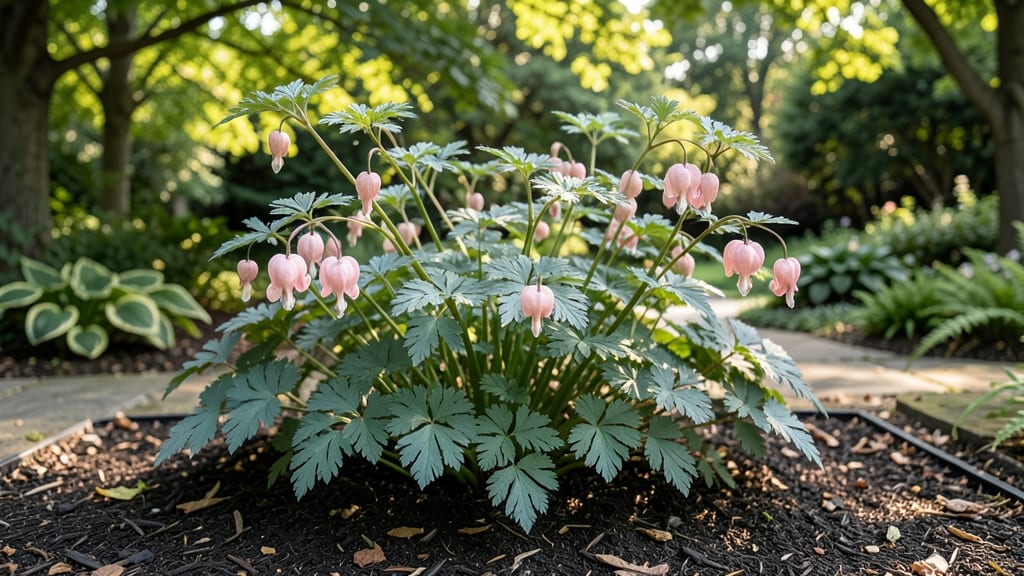
Your shade garden just got a showstopper—bleeding heart plants (Dicentra spectabilis) bring delicate pink or white heart-shaped blooms that dance through spring and summer. 💚 I've grown mine in deep shade under towering maples, and they thrive where most plants give up, creating lush, romantic foliage that lasts all season long.
These plants love rich, moist soil that drains well—think of them as the divas of the shade garden. They'll reward you with 3-4 weeks of stunning flowers if you give them the right spot: partial to full shade, protected from harsh afternoon sun.
Water consistently, especially during their first year, and you'll see those iconic heart-shaped blooms emerge like clockwork.
What makes bleeding heart special is how it performs year-round: vibrant green foliage in summer, fiery red stems in fall, and even a touch of winter interest with its arching habit.
Prune back old foliage in early spring to make room for fresh growth, and watch your garden transform into a serene, dreamy retreat.
Perfect for woodland gardens, foundation plantings, or any spot where sunlight is shy. With the right care, these plants will become the backbone of your shade garden, offering beauty and texture that few others can match. Let's get yours growing!
📚 In This Guide
- What you need
- Instructions
- Tips and common mistakes
- Wrapping up and next steps
What you need
- ● Bleeding Heart Plant: 1–3 Dicentra spectabilis tubers or young plants (for immediate blooms, opt for tubers or 1-gallon pots).
- ● OR Seeds (if you’re patient—germination takes 2–3 weeks and blooms may take 2 years!).
- ● Soil: 1–2 cubic yards of well-draining, rich loam (amend with 5–10 lbs of compost or aged manure per cubic yard).
- ● Fertilizer: 1 lb of balanced 10-10-10 fertilizer (or organic options like fish emulsion).
- ● Mulch: 2–3 inches of wood chips or shredded bark (to retain moisture and suppress weeds).
- ● Garden trowel or transplant spade (for digging).
- ● Garden gloves (to protect your hands from thorny stems!).
- ● Watering can or hose with a gentle spray nozzle.
- ● Pruners (for cleanup after blooming).
- ● Measuring tape or ruler (to space plants 12–18 inches apart).
- ● Slow-release fertilizer granules (for long-term nourishment).
- ● Plant stakes or cages (if your variety gets top-heavy).
- ● Epsom salt (1 tbsp in water monthly for magnesium boost).
- ● Shade cloth (if your area gets brief hot sun).
Step-by-step instructions for planting and caring for bleeding heart
Here’s how to grow this dreamy shade plant with minimal fuss—just follow these simple steps.
🌱 Step 1: Choose the Perfect Planting Spot
Bleeding heart thrives in partial to full shade, so pick a location that gets morning sun and afternoon shade (or dappled light all day). Avoid harsh afternoon rays, which can scorch delicate foliage. I always test the spot first by observing how much light it gets over a few days—if you can still read a book comfortably in the shade, it’s ideal.
Dig a hole twice as wide as the root ball but only as deep as the container it came in. Loosen the edges of the hole with your hands or a trowel to encourage root spread. Bleeding heart prefers moist, well-draining soil—amend heavy clay with compost or peat moss if your soil drains poorly. A slightly acidic to neutral pH (6.0–7.0) works best.
🪴 Step 2: Plant with Care to Encourage Strong Growth
Gently remove the plant from its container and tease the roots apart if they’re circling tightly. Place it in the hole so the top of the root ball sits level with the surrounding soil—burying too deep can cause rot, while planting too high stresses the plant. Fill the hole halfway with soil, then water deeply to settle it and eliminate air pockets.
Finish filling the hole, pressing lightly around the base to secure the plant. Water again until the soil is evenly moist but not soggy. Mulch with 2–3 inches of organic mulch (like shredded bark or leaves) to retain moisture and suppress weeds. Keep the mulch 2 inches away from the stem to prevent rot.
☀️ Step 3: Water and Feed for Lush, Healthy Foliage
Water once a week (or more often in hot, dry weather) to keep the soil consistently moist—bleeding heart hates drying out. You’ll know it’s thirsty when the top inch of soil feels dry. Water deeply at the base, avoiding the leaves to prevent fungal issues. A drip irrigation system or soaker hose works best to deliver steady moisture without wetting foliage.
Feed in early spring with a balanced, slow-release fertilizer (like 10-10-10) mixed into the soil. Skip fertilizer in fall and winter—bleeding heart goes dormant and doesn’t need extra nutrients. If your soil is poor, a top-dressing of compost in spring gives a gentle nutrient boost without risking overfeeding.
✂️ Step 4: Prune and Maintain for Year-Round Interest
Cut back dead or yellowed foliage in late fall or early spring before new growth appears. Use clean, sharp pruners to make cuts just above a leaf node (where new growth can emerge). Avoid heavy pruning in summer—bleeding heart blooms on old wood, so trimming back too much reduces next year’s flowers.
Divide clumps every 3–4 years in early spring if the plant looks crowded. Dig up the root ball, separate sections with a sharp knife, and replant immediately. This rejuvenates the plant and prevents overcrowding, which leads to fewer blooms. Water thoroughly after dividing to help roots establish.
⏰ Step 5: Protect and Enjoy Year-Round Drama
Bleeding heart is hardy in zones 3–9, but in colder climates, mulch heavily in fall to insulate roots. In hot, dry summers, provide extra shade and water to prevent stress. Watch for aphids or spider mites—spray with water or neem oil if you spot them. Aphids love the tender new growth, but a strong spray usually knocks them off.
This plant rewards patience—first-year growth is modest, but by year two, you’ll see lush, heart-shaped blooms that last from late spring to summer. Even when not in bloom, the ferny foliage adds texture to shady gardens. With minimal care, bleeding heart becomes a low-maintenance star in your shade garden.
Tips & tricks for perfect bleeding heart plant care
These simple strategies will help you coax the most dramatic blooms and lush foliage from your shade-loving beauty.
Location Scout Like a Pro: Before planting, observe your chosen spot for a full day. Bleeding heart needs consistent shade—if leaves start curling or turning yellow within weeks, you’ve got too much sun. I’ve seen plants thrive in spots where hostas would struggle, so don’t be afraid to test unusual locations like north-facing walls or under large trees with dappled light. The key is that spot where you can still read a book comfortably during peak afternoon sun.
Soil Prep Secret: The hole you dig should be twice as wide but only as deep as the root ball—this encourages roots to spread horizontally where they’ll find moisture. For heavy clay soils, mix in a 50/50 blend of compost and peat moss before planting. I’ve had the best success when I actually dig the hole the day before planting and let it sit overnight—this prevents soil compaction when you plant. Pro tip: Add a handful of bone meal to the bottom of the hole for extra phosphorus, which boosts blooming.
Watering Wisdom: Bleeding heart hates drying out, but it also hates soggy roots. The once-a-week guideline works for average conditions, but in hot weather, check soil moisture daily—stick your finger an inch deep. If it’s dry, water thoroughly until moisture reaches 6 inches down. I’ve found that watering in the morning gives roots time to absorb moisture before evening heat evaporates it. And here’s what nobody tells you—water the base only, never the leaves, to prevent those pesky fungal issues that can turn foliage yellow.
Pruning Payoff: When you cut back dead foliage in late fall or early spring, make your cuts just above a leaf node where new growth emerges. This simple technique ensures you’re not accidentally removing potential blooming stems. I’ve seen gardeners accidentally trim off next year’s flowers by cutting too low—always look for that little bump where leaves attach to the stem. For crowded plants, dividing every 3-4 years in early spring gives you free plants for friends while rejuvenating your main specimen.
Pro Tips for Bleeding Heart Shade Plant
- These simple strategies will help you coax the most dramatic blooms and lush foliage from your shade-loving beauty.
- Location Scout Like a Pro: Before planting, observe your chosen spot for a full day.
- Soil Prep Secret: The hole you dig should be twice as wide but only as deep as the root ball—this encourages roots to spread horizontally where they’ll find moisture.
Frequently asked questions
Got questions about nurturing your Bleeding Heart (Dicentra spectabilis)? You’re not alone! Here are answers to the most common queries—so you can keep your shade-loving beauty thriving with confidence.
How do I keep my bleeding heart plant blooming every year?
Bleeding hearts are perennials, but they often need a little encouragement. After blooming, trim spent flowers but leave the foliage until it yellows—this helps store energy for next year. In late summer or early fall, apply a balanced fertilizer (like 10-10-10) and mulch with 2–3 inches of organic matter (e.g., compost or shredded leaves) to protect roots in winter. Pro tip: Divide clumps every 3–4 years to rejuvenate growth!
When is the best time to plant bleeding heart?
Plant in early spring or early fall when soil temperatures are cool (50–65°F). Avoid summer heat, which can stress roots. If transplanting an established plant, water deeply before and after moving to reduce shock. For container-grown plants, keep them in pots until the ground is workable for easier handling. Bonus: Fall planting gives roots time to establish before winter dormancy!
Can bleeding heart grow in full shade?
Yes! This plant thrives in full to partial shade (2–6 hours of sunlight daily). Too much direct sun can scorch leaves or cause flowers to fade prematurely. Ideal spots include under deciduous trees, north-facing walls, or shaded garden beds. If leaves look pale, it might need slightly more light—but never full sun. Troubleshooting: Yellowing leaves? Check for overwatering or poor drainage.
What pests or diseases should I watch for?
Bleeding hearts are generally low-maintenance, but keep an eye out for:
- Slugs/snails: Raveling leaves or chewed foliage? Set up beer traps or use organic slug pellets.
- Powdery mildew: White dust on leaves? Improve airflow and avoid overhead watering.
- Japanese beetles: Rare but possible—handpick adults or use neem oil.
Most issues stem from overwatering or crowded roots. Ensure soil drains well and space plants 12–18 inches apart. Prevention tip: Apply mulch to deter pests and retain moisture!
What are some alternatives if bleeding heart doesn’t thrive in my garden?
If your climate is too hot/humid or soil is poor, try these shade-loving perennial companions:
Plant
Why It Works
Astilbe
Feathery plumes, loves moisture, great for boggy spots.
Hosta
Hardy, low-maintenance, and thrives in deep shade.
Lungwort (Pulmonaria)
Unique spotted leaves + early spring blooms.
Japanese Anemone
Late-season flowers (pink/white) for added drama.
Pro tip: Pair with ferns (e.g., Matteuccia struthiopteris) for a lush, woodland vibe!
Wrapping up and next steps
The Bleeding Heart plant is a dream come true for gardeners craving year-round drama in shady spots—its heart-shaped blooms and lush foliage bring effortless elegance to any space. With the right care, this shade-loving beauty thrives, rewarding you with vibrant displays from spring to fall (and sometimes beyond!).
Ready to transform your garden? Start by selecting the perfect spot, gathering your supplies, and following the steps above. Whether you’re a seasoned gardener or a beginner, this plant’s forgiving nature makes it a joy to grow. Grab your gloves and get planting—your shade garden’s star is waiting! 🌿✨