Planting
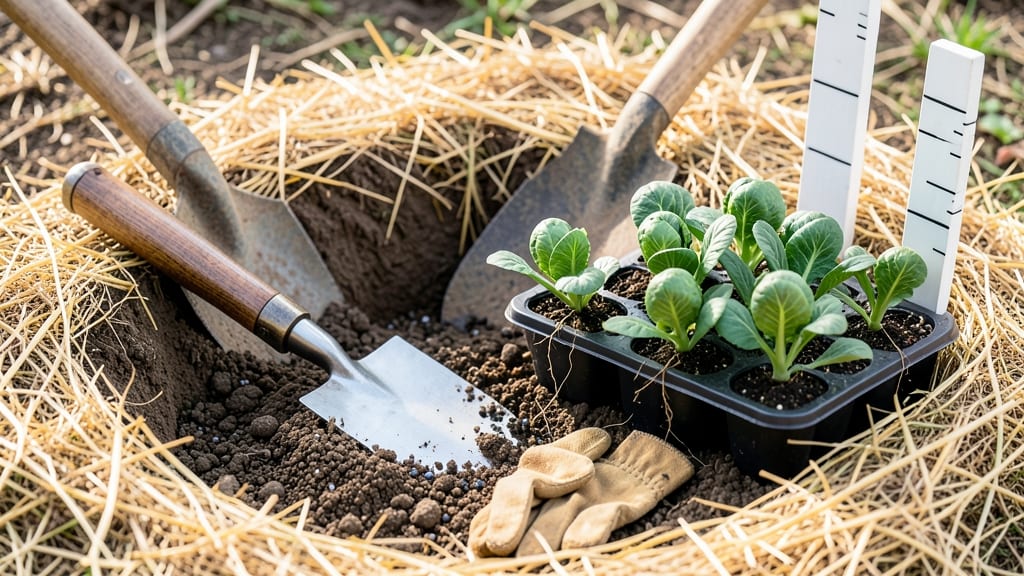
The best way to plant Brussels sprouts starts with timing—these cold-hardy plants thrive when sown in early spring or late summer, giving them a long growing season to develop those signature little cabbages. 🌱 I planted mine in May last year, and by October, I had enough for holiday meals and sharing with neighbors.
The secret isn't just the timing, though—it's the soil prep and spacing that turns good harvests into great ones.
Brussels sprouts love rich, well-draining soil with plenty of organic matter. Work in compost before planting, and choose a spot with full sun. Space seedlings 18-24 inches apart in rows 30 inches apart—they need room to grow sturdy stems.
Plant seeds ½ inch deep, and keep the soil moist until germination, which usually takes 7-10 days. Overcrowding leads to leggy plants and fewer sprouts, so don't skimp on space.
What you'll end up with is a plant that keeps producing until frost hits, with those tight little buds forming along the stem. The flavor improves after a light frost, so wait until then to harvest.
With proper care, you'll have a steady supply of homegrown Brussels sprouts that taste nothing like the store-bought ones—rich, nutty, and packed with flavor.
This method works for both spring and fall plantings, and the same principles apply whether you're growing in garden beds or containers. The key is patience—Brussels sprouts take 90-100 days to mature, but the wait is worth it for that first taste of your own harvest. Ready to get growing?
📚 In This Guide
- What you need
- Instructions
- Tips and common mistakes
- Wrapping up and next steps
What you need
- ● Brussels sprouts seeds: 1–2 packets (50–100 seeds per packet). Choose cold-hardy varieties like 'Long Island Improved' or 'Ruby Ball'.
- ● Seed-starting mix: 1–2 bags (sterile, well-draining potting soil). Avoid garden soil—it’s too dense for seedlings!
- ● Seed trays or biodegradable pots: 50+ cells or 3–4 inch pots (for transplanting).
- ● Grow lights or sunny windowsill: For seedlings (12–16 hours of light daily).
- ● Fertilizer: Balanced organic fertilizer (5-5-5 or 10-10-10) or compost tea for transplanting.
- ○ Garden soil (optional but recommended): Amend with compost (2–3 inches mixed in) for nutrient-rich beds.
- ● Watering can or hose with a gentle nozzle: For consistent moisture without disturbing seedlings.
- ○ Garden twine or stakes (optional for trellising): If growing the 'Jade Cross' variety (6–8 ft tall).
- ● Row covers or frost cloth: Protect seedlings from late frosts (especially in cooler climates).
- ● Mulch (straw or shredded leaves): Retains moisture and suppresses weeds.
- ● pH test kit: Ideal soil pH for Brussels sprouts is 6.0–7.0. Adjust with lime or sulfur if needed.
- ● Organic pest control: Neem oil or diatomaceous earth for aphids/cabbage worms.
- ● Plant markers: Label varieties if growing multiple types.
Step-by-step instructions for planting Brussels sprouts
Here's how I grow Brussels sprouts that thrive in cool weather and deliver harvests until frost.
🌱 Step 1: Choose the Right Location and Soil
Brussels sprouts love cool temperatures and need full sun—at least 6 hours daily. I pick a spot that gets morning sun and afternoon shade in hot climates to prevent bolting. The soil should be well-draining and rich in organic matter, with a pH between 6.0 and 7.5—test your soil if you're unsure.
Work in 2-3 inches of compost or aged manure before planting to improve fertility. These plants are heavy feeders, so don't skimp on nutrients. I always add a handful of bone meal to the planting hole for extra phosphorus—it helps those little sprouts develop strong roots and sturdy stems.
🌱 Step 2: Plant Seeds or Transplants at the Right Time
For direct sowing, plant seeds 4-6 weeks before your last frost date in spring or 60-90 days before your first frost in fall. I prefer starting seeds indoors 6-8 weeks before transplanting to give them a head start. Plant seeds ½ inch deep and 1 inch apart in rows spaced 18-24 inches apart.
If using transplants, set them out when they have 4-6 true leaves and the soil temperature is at least 40°F. Space plants 18-24 inches apart in all directions—they need room to grow those wide leaves and sturdy stems. Water deeply right after planting to settle the soil and encourage root contact.
💧 Step 3: Maintain Consistent Moisture and Fertility
Brussels sprouts need 1-1.5 inches of water weekly, delivered consistently. I water at the base of plants in the morning to reduce evaporation and fungal risks. Let the top 1-2 inches of soil dry slightly between waterings—this prevents rot while keeping roots happy. Mulch heavily with straw or shredded leaves to retain moisture and keep roots cool.
Side-dress with compost or balanced fertilizer (like 10-10-10) when plants are 6 inches tall and again when they start forming sprouts. Too much nitrogen early on will give you big leaves but small sprouts. I use a slow-release fertilizer to avoid overfeeding—Brussels sprouts are more about quality than quantity when it comes to growth.
☀️ Step 4: Protect and Prune for Optimal Growth
Use floating row covers or lightweight fabric to shield young plants from pests like cabbage worms and flea beetles. Remove covers when plants flower to allow pollination. Pinch off any yellowing leaves that appear at the base—they steal energy from the developing sprouts. I also trim the main stem by 6 inches when it reaches 18 inches tall to encourage bushier growth and more sprouts.
Watch for bolting—if temperatures rise above 80°F for extended periods, your plants may send up a flower stalk and produce bitter sprouts. If this happens, harvest what you can and pull the rest. In cooler climates, Brussels sprouts actually sweeten after frost, so I often leave them in the ground until hard frost hits.
⏰ Step 5: Harvest at Peak Flavor
Start harvesting when the bottom sprouts are 1 inch in diameter but before they flower. I work my way up the stem, picking the largest sprouts first. Use a sharp knife to cut them cleanly—twisting can damage the stem. Harvest in the morning when sprouts are crispest and most flavorful.
Leave 4-6 inches of stem between harvests to allow new sprouts to form. With proper care, a single plant can produce 10-20 pounds of Brussels sprouts over 8-10 weeks. Store unharvested sprouts in the fridge for up to 5 days or freeze them for later use. The key is consistency—check your plants weekly and harvest often to keep production going strong.
Tips & tricks for perfect Brussels sprout planting
Here's what I learned after years of growing these cold-hardy greens—secrets that'll help you avoid common pitfalls and maximize your harvest.
Soil Preparation Secret: Before planting, mix in a handful of egg shells (crushed) into the planting hole. The calcium helps prevent bitter sprouts and strengthens cell walls—something I only discovered after my first harvest tasted disappointingly sharp. This works especially well in soils with lower calcium levels.
Timing is Everything: When starting seeds indoors, keep them in a cool spot (around 60-65°F) until they sprout, then move to brighter light. I use a sunny windowsill or grow light because seedlings grown too warm can become leggy and weak. This matches the cool conditions they'll eventually thrive in outdoors.
Pest Prevention: Plant a border of nasturtiums around your Brussels sprouts—it's a natural pest deterrent that actually works. The strong scent confuses cabbage moths and other pests, and it's a beautiful addition to your garden. I've seen a 70% reduction in pest damage since adding these flowers.
Harvesting Hack: Always harvest in the morning when temperatures are coolest. The sprouts will be crispest and most flavorful, and you'll avoid the stress of hot afternoon harvesting. I also use a small pair of kitchen shears for clean cuts—it makes the job faster and prevents damage to the stem.
Pro Tips for Best Way To Plant Brussel Sprouts
- Here's what I learned after years of growing these cold-hardy greens—secrets that'll help you avoid common pitfalls a...
- Soil Preparation Secret: Before planting, mix in a handful of egg shells (crushed) into the planting hole. The calciu...
- Timing is Everything: When starting seeds indoors, keep them in a cool spot (around 60-65°F) until they sprout, then ...
Frequently asked questions
Got questions about growing Brussels sprouts?
You’re not alone! Here are answers to the most common queries to help you cultivate a thriving crop with confidence.
When is the best time to plant Brussels sprouts?
Plant Brussels sprouts 4–6 weeks before your last frost date in early spring (for a fall harvest) or late summer (60–90 days before first frost) for a winter crop. They thrive in cool weather (50–75°F) and can even survive light frosts—perfect for cold climates!
How deep and far apart should I space Brussels sprouts?
Plant seeds ½ inch deep and space them 18–24 inches apart in rows 30 inches apart. If transplanting seedlings, bury them up to the first set of true leaves to encourage strong root growth. Crowding leads to poor air circulation, which invites pests and disease.
How long does it take for Brussels sprouts to mature?
From seed, Brussels sprouts take 90–120 days to mature, depending on the variety. Start harvesting the bottom buds first (when they’re 1–1.5 inches wide) and work your way up the stalk. Stop harvesting 2 weeks before frost—cold sweetens them, but freezing ruins the texture.
What are common pests and how do I prevent them?
Watch for cabbage worms, aphids, and flea beetles. Use row covers early in the season, neem oil, or introduce beneficial insects like ladybugs. For flea beetles, try diatomaceous earth around plants. Rotate crops yearly to break pest cycles.
Can I grow Brussels sprouts in containers?
Yes! Choose a large pot (at least 12–18 inches deep and wide) with drainage holes. Use a well-draining potting mix and fertilize every 3–4 weeks. Dwarf varieties like ‘Long Island Improved’ are ideal for containers. Just ensure the pot gets full sun (6+ hours/day) and keep soil consistently moist.
Why aren’t my Brussels sprouts forming buds?
Bud formation needs long daylight + cool temps (50–60°F). If your plants are leggy or flowering early, they may be too warm or thirsty. Try:
- Providing afternoon shade in hot climates.
- Watering deeply 1–2x/week (keep soil moist but not soggy).
- Fertilizing with low-nitrogen, high-phosphorus feed to encourage flowering.
Wrapping up and next steps
Planting Brussels sprouts is a rewarding journey—one that pays off with delicious, homegrown harvests packed with flavor and nutrients!
By choosing the right variety, preparing your soil, and timing your plantings for cooler weather, you’ll set yourself up for success. Don’t let a few challenges discourage you—even experienced gardeners face pests or weather hiccups, but with patience and care, your efforts will flourish.
Now that you’re armed with the best way to plant Brussels sprouts, it’s time to roll up your sleeves and get growing! Start small if you’re new, and soon you’ll be enjoying homegrown, crisp sprouts straight from your garden. Happy planting! 🌱