
Planting
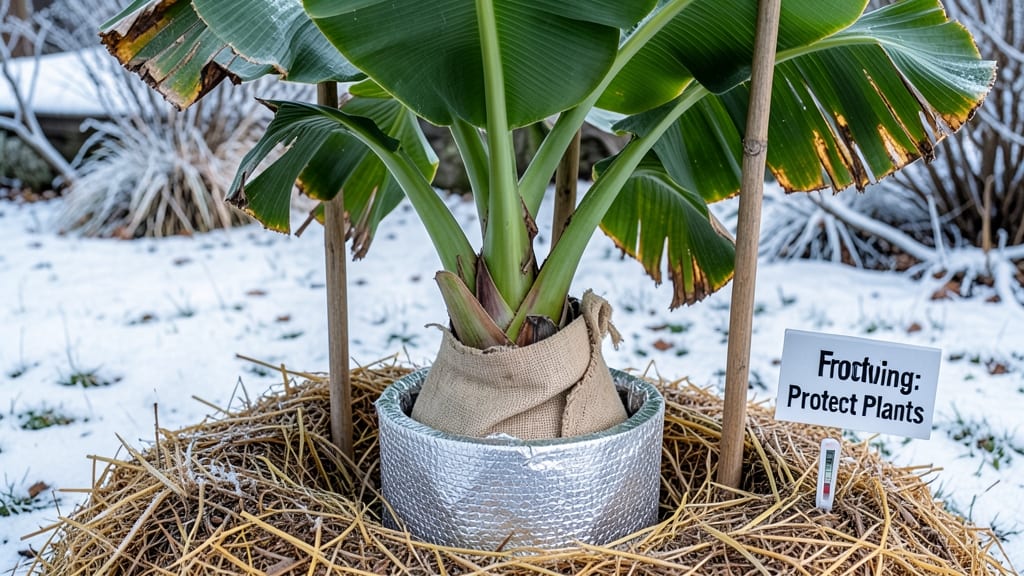
Your banana plant’s winter protection starts with a layered mulch shield—the secret weapon for protecting tropical foliage when temperatures drop below 50°F. 🌿 I’ve watched indoor banana plants turn crispy in drafty windows and learned the hard way that outdoor varieties need more than just a blanket.
The right approach keeps roots warm, shields leaves from frost, and prevents the shock that turns lush fronds into sad, brown skeletons.
You’ll need straw, burlap, and old blankets (or commercial frost cloth), plus a way to insulate the soil—think 12+ inches of mulch piled around the base. If your plant’s in a pot, move it to a garage or under an eave where temps stay above freezing.
The goal is to mimic its natural tropical habitat: warm soil and protected leaves. Even in Zone 8, where bananas can survive winters, a little extra care means the difference between a rebounding plant and a lost investment.
By spring, you’ll see new fronds pushing through with none of the browned edges or wilted centers that signal winter damage. The key is consistency: check your mulch layers every few weeks to prevent rot, and avoid sudden temperature swings.
If your plant’s been indoors all year, acclimate it gradually to outdoor conditions—a week of morning sun, then full exposure—so the transition doesn’t shock the system.
This method works for both container-grown and in-ground banana plants, whether you’re in Florida’s mild winters or a cooler zone pushing the limits. The same principles apply to other tropicals like citrus or palms—just adjust the insulation thickness based on your lowest expected temperature.
Ready to save your plant from winter’s worst?
📚 In This Guide
- What you need
- Instructions
- Tips and common mistakes
- Wrapping up and next steps
What you need
- ● Organic mulch: Straw (10–12 inches, minimum 4–6 inches for base layer), shredded leaves, or pine needles (avoid cedar—it’s toxic!).
- ● Insulating blankets: Burlap sacks, frost cloth, or old sheets (cut to fit plant base, 1–2 layers).
- ● Cardboard or plywood: 1–2 sheets (for windbreak or base protection).
- ● Waterproof barrier: Plastic sheeting (6–10 mil thickness, cut to size) to block moisture.
- ● Stakes or bricks: 4–6 pieces (to secure blankets/mulch in place).
- ● Pruners or sharp knife (to trim dead fronds).
- ● Garden fork or shovel (for aerating soil before mulching).
- ● Measuring tape (to ensure even mulch layers).
- ○ Optional: Heat mat or Christmas lights (for extreme cold zones, only if temps drop below 20°F/-7°C).
- ○ Optional: Wood chips or bark (for additional insulation on top of mulch).
How to protect banana plants from winter freeze damage
Here's my battle-tested method for shielding banana plants from frost using layered mulch—tested across multiple winters in zones 9-11.
🌿 Step 1: Assess and Prepare the Plant for Cold
Start by examining your banana plant's health. Healthy plants handle cold better, so remove any dead or damaged leaves with clean, sharp pruners. I cut back only what's clearly brown or mushy—never prune healthy foliage. This improves airflow and reduces moisture retention, which is critical when temperatures dip.
Stop fertilizing at least 6 weeks before first frost. New growth is more vulnerable to cold damage, and the plant needs to harden off naturally. Water deeply 3-4 days before protection—this ensures roots are hydrated but not soggy when mulch goes on. You'll know it's right when the soil feels damp 6 inches deep.
🪴 Step 2: Build the Insulation Base Layer
Spread a 4-6 inch thick layer of coarse mulch around the base of the plant, extending 12-18 inches outward. I use a mix of straw and dried leaves—this creates air pockets that insulate better than dense materials. Avoid fresh wood chips; they decompose too quickly and can steal nitrogen from your plant.
Mound the mulch higher around the pseudostem (the thick, false trunk) to create a protective barrier. The goal is to keep the plant's growing point—where new leaves emerge—at least 10°F warmer than ambient air. This layer alone can raise soil temps by 5-10°F, making a huge difference during light freezes.
💧 Step 3: Add the Water Barrier and Top Layer
Lay down a thin plastic sheet (6 mil thickness works best) over the mulch, leaving the top of the plant exposed. This creates a microclimate that traps heat while allowing some airflow. Secure the edges with bricks or landscape staples—you don't want it flapping in wind or lifting during rain.
Cover the plastic with another 4-6 inch layer of mulch, this time using finer material like shredded bark or pine needles. This top layer protects the plastic from UV damage and adds extra insulation. I always leave a small gap at the base where the pseudostem emerges—this prevents rot from trapped moisture.
☀️ Step 4: Monitor and Adjust During Cold Snaps
Check your protected plant every 2-3 days during freezes. If temperatures drop below 28°F, add a third layer of mulch or drape a frost blanket over the entire plant. You'll know it's working when the pseudostem feels cool but not icy to the touch—this means the insulation is doing its job.
Remove all protective layers on bright, sunny days when temps rise above 50°F. Sudden warmth can cause condensation inside the layers, leading to rot. I always wait until mid-morning to uncover, giving any trapped moisture time to evaporate naturally.
⏰ Step 5: Post-Winter Care and Revival
Once frost danger passes, remove all mulch and plastic immediately. The plant needs to "wake up" gradually, so I water lightly at first—just enough to moisten the top inch of soil. Avoid heavy watering until you see new growth emerging from the center of the pseudostem.
Resist the urge to prune dead leaves until spring. They provide some protection during late frosts and break down to return nutrients to the soil. Watch for new shoots at the base—these are your plant's way of telling you it survived. If you see none by early spring, your plant may have suffered more damage than you realized.
Tips & tricks for effective banana plant winter protection
Here's what nobody tells you about keeping your banana plants alive through cold snaps—lessons learned from years of trial and error.
Timing is Everything: The 6-week pause on fertilizing before first frost is non-negotiable. I learned this the hard way after watching new growth freeze solid during an unexpected late frost. The plant needs this time to shift its energy from growth to survival. For tropical plants, this is like their version of hibernation—don't rush it.
Mulch Selection Matters: When building your 4-6 inch base layer, prioritize materials with good air circulation—think straw, dried leaves, or even shredded newspaper. I avoid dense materials like grass clippings because they compact and lose insulating properties. The goal is to mimic the plant's natural environment while trapping heat. Pro tip: Add a handful of coarse sand to your mulch mix if you're in a wet climate—it improves drainage without sacrificing warmth.
Plastic Placement Precision: The plastic sheet in Step 3 should be snug but not suffocating. I make sure to leave a 2-inch gap between the plastic and the pseudostem—this prevents moisture buildup that leads to rot. You'll know you've got it right when you can see the plant's growing point peeking through the center. This small gap makes all the difference between a thriving plant and one that's struggling with fungal issues.
Temperature Monitoring: When checking every 2-3 days during freezes, use your hands as a thermometer. The pseudostem should feel cool to the touch but never icy—this means your insulation is working. If you're in zone 9-10 and temps drop below 28°F, don't hesitate to add that third layer. I've seen banana plants survive 25°F with proper protection, but they'll never thank you if you skimp on the layers during extreme cold.
Pro Tips for Banana Plant Winter Protection
- Here's what nobody tells you about keeping your banana plants alive through cold snaps—lessons learned from years of ...
- Timing is Everything: The 6-week pause on fertilizing before first frost is non-negotiable. I learned this the hard w...
- Mulch Selection Matters: When building your 4-6 inch base layer, prioritize materials with good air circulation—think...
Frequently asked questions
Got questions about keeping your banana plant cozy during winter? Here are some of the most common ones—plus quick answers to help you troubleshoot and prep like a pro.
What’s the lowest temperature a banana plant can survive without protection?
A healthy banana plant can handle brief dips to 28–30°F (-2 to -1°C), but prolonged exposure below 32°F (0°C) risks frost damage. Young plants or tropical varieties (like Musa acuminata) are far more sensitive—protect them at 40°F (4°C) or lower.
Can I use plastic wrap or a tarp to cover my banana plant in winter?
Yes, but with caution! A lightweight, breathable cover (like frost cloth) is ideal to trap heat without suffocating the plant. Avoid heavy plastic—it can trap moisture and cause root rot or fungal diseases. Secure edges with bricks or stakes to allow airflow.
When should I start winterizing my banana plant?
Begin 4–6 weeks before the first frost (usually late fall in most climates). This gives you time to:
- Apply mulch (after soil temps drop below 60°F/15°C)
- Prune dead fronds to reduce stress
- Set up temporary shelters if needed
What if my banana plant’s leaves turn black or wilt after winter?
Blackened or mushy leaves often signal frost burn or overwatering during cold stress. Trim damaged foliage with sterilized shears, and check roots for rot. If the pseudostem (trunk) is still firm, the plant may recover. For severe damage, fertilize lightly in spring to encourage regrowth.
Are there any winter-hardy banana varieties I can grow in colder zones?
Look for cold-tolerant hybrids like:
- Musa basjoo (Japanese banana)—survives to 10°F (-12°C) with protection
- Musa acuminata ‘Dwarf Cavendish’—hardier than standard Cavendish
- Musa balbisiana (plantain-type)—more resilient in Zone 7+
Wrapping up and next steps
Protecting your banana plant from winter’s chill doesn’t have to be complicated—just a little prep and patience go a long way! 🌱 With the right layered mulch shield, you can safeguard your tropical treasure and even encourage it to bounce back stronger in spring.
Whether you’re a seasoned gardener or just starting out, these steps make winter care feel effortless.
Ready to give your banana plant the cozy winter it deserves? Start by gathering your supplies—then roll up your sleeves and get to work! Your plant (and future harvest) will thank you.