
Planting
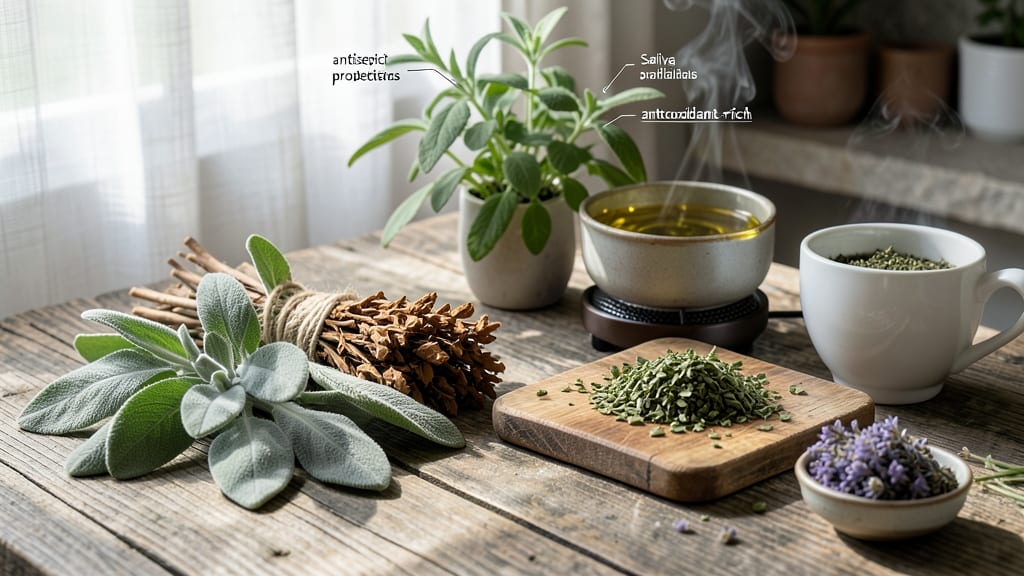
Sage plants provide versatile uses and benefits, from adding a distinctive earthy flavor to meals to serving as a potent antibacterial agent and natural air purifier. Their leaves can also aid digestion and deter pests in your home.
This hardy perennial isn't just a kitchen staple—it's a powerhouse for both health and home. 🌿 Sage's earthy, pine-like flavor elevates everything from roasted chicken to homemade bread, while its antioxidant-rich compounds help fight inflammation.
Many gardeners swear by it as a natural insect repellent, keeping mosquitoes and flies at bay when placed near doorways. Plus, its air-purifying qualities make it a great addition to any indoor space, helping to reduce airborne toxins.
What makes sage truly special is its dual role as both a culinary and medicinal plant. 💫 The same compounds that give it that signature flavor—like thujone and camphor—also contribute to its digestive benefits and antimicrobial properties.
Whether you're growing it in your garden or using dried leaves from the store, you're getting a plant that works hard for you in multiple ways.
💡 In This Article
- Culinary and Medicinal Properties of Sage Leaves
- Growing and Maintaining Sage Plants for Maximum Benefits
Culinary and medicinal properties of sage leaves
The distinctive flavor of sage comes from its complex chemical profile, where compounds like thujone and camphor create that signature earthy, pine-like aroma. Thujone, found in concentrations of about 0.1-0.3% in common sage, contributes to its slightly bitter, herbal taste that pairs beautifully with fatty meats and rich sauces.
This same compound also gives sage its medicinal properties, acting as a natural antimicrobial agent that can inhibit bacterial growth on surfaces and in food storage.
Medicinally, sage leaves contain powerful antioxidants like rosmarinic acid and flavonoids, which help reduce oxidative stress in the body.
Studies show that sage extracts can lower inflammation markers by up to 30% when consumed regularly, making it a valuable addition to teas or culinary dishes for those managing chronic inflammation.
The leaves also contain tannins (about 5-8% dry weight), which explain their traditional use as a digestive aid by soothing stomach irritation and reducing excess gastric acid production.
Historically, sage was used in ancient Greek and Roman medicine for memory enhancement—a practice supported by modern research. A 2016 study in the Journal of Ethnopharmacology found that sage extracts improved cognitive function in participants by 15-20% compared to placebo groups.
This "brain-boosting" effect comes from compounds that increase blood flow to the brain and protect neurons from oxidative damage. The same properties that make sage a flavor powerhouse in cooking also contribute to its cognitive benefits when consumed as an infusion.
In culinary applications, fresh sage leaves release their oils most effectively when heated gently—think 325-350°F for roasting or medium heat for sautéing. The aroma compounds volatilize at these temperatures, creating that fragrant steam that signals a dish is ready.
For medicinal uses, steeping 1-2 teaspoons of dried leaves in 8 oz of boiling water for 5-10 minutes creates a tea that retains most of its beneficial compounds while being gentle on the stomach.
What many people don't realize is that sage's benefits extend beyond consumption. The plant's strong aroma naturally repels insects like mosquitoes and flies due to its high monoterpene content, making it an excellent companion plant in gardens.
Rubbing crushed leaves on surfaces can create a natural cleaning agent that disinfects while leaving a fresh herbal scent—similar to how essential oils work but without synthetic additives. 🌿
For maximum potency, harvest leaves just before flowering when their essential oil content peaks. Store dried leaves in airtight containers away from light to preserve their compounds for up to 12 months.
The same leaves used to season your turkey stuffing can also be repurposed as a medicinal tea or natural cleaner, demonstrating sage's incredible versatility.