
Planting
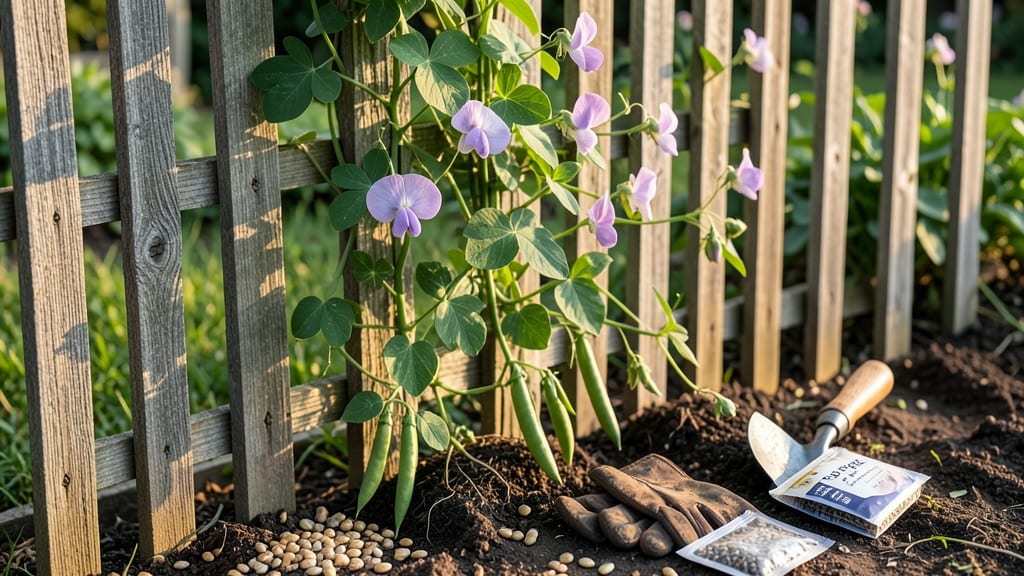
Planting sweet peas on a trellis transforms your garden into a fragrant vertical wonderland. 🌿 The key is starting them early indoors—6-8 weeks before your last frost—so they’re ready to climb by spring.
I’ve seen these delicate vines reach 6-8 feet in a single season, their blooms cascading like living jewelry. You’ll need well-draining soil, sturdy stakes or a trellis, and a sunny spot with afternoon shade. Sweet peas thrive when planted 1 inch deep, with seeds spaced 2-3 inches apart.
The trellis should be 5-6 feet tall to support their rapid growth. Once planted, keep the soil consistently moist but not soggy—water at the base to avoid fungal issues.
Pinch back the first set of blooms to encourage bushier growth, and watch as those vibrant flowers take over your vertical space. This method works for both spring and fall planting, and the scent alone makes it worth the effort. Let’s get those vines climbing!
📚 In This Guide
- What you need
- Instructions
- Tips and common mistakes
- Wrapping up and next steps
What you need
- ● Sweet pea seeds: Choose disease-resistant varieties like 'Cupid,' 'Spencer,' or 'Black Eyes.' Aim for 6–12 seeds depending on desired coverage.
- ● Trellis: A sturdy 6–8 ft tall trellis (wooden, metal, or plastic). Ensure it’s at least 2 ft wide for climbing support.
- ● Potting soil: 1–2 bags of well-draining, organic-rich potting mix (or garden soil amended with compost).
- ● Containers or garden bed: If container-grown, use 5–10 gallon pots with drainage holes.
- ● Watering can or hose: With a gentle spray nozzle for hydration.
- ● Fertilizer: A balanced 10-10-10 or 5-10-10 granular fertilizer (or organic options like fish emulsion).
- ○ Twine or soft ties: For securing vines to the trellis (optional but helpful).
- ● Mulch: Straw or shredded leaves to retain moisture.
- ● Plant supports: Small stakes or clips for early vine guidance.
- ● Epsom salt: A spoonful in planting holes for magnesium boost (great for blooms!).
- ● Pest control: Neem oil or insect netting to deter aphids.
- ● Decorative accents: Solar lights or lattice for a charming touch!
Step-by-step instructions for planting sweet peas on a trellis
Here’s how to coax those fragrant, climbing sweet peas into a thriving vertical display—no guesswork, just proven techniques.
🌱 Step 1: Choose and Prepare the Right Trellis
Sweet peas need a sturdy, open trellis that can support their 3-6 foot vines without bending. I use wooden lattice panels or metal mesh for durability, securing them vertically in the ground with stakes or wire. The trellis should be at least 4 feet tall—taller if you’re growing dwarf varieties like ‘Cupani’ or giant types like ‘Blue Moon’. Place it in a spot with full sun to partial shade, as sweet peas appreciate afternoon shade in hot climates.
Before planting, give the trellis a light sanding to remove any rough edges that could damage delicate vines. If using a freestanding structure, anchor it with 4-6 inch stakes hammered into the ground at a 45-degree angle for stability. Real talk: a flimsy trellis will sag under the weight of blooms, so invest in something that won’t wobble when you lean against it.
🌿 Step 2: Soak Seeds and Plant at the Right Depth
Sweet pea seeds have a hard outer coat, so I soak them overnight in lukewarm water to soften it—this speeds up germination from 2-3 weeks to just 7-10 days. Drain and plant 1 inch deep, spacing seeds 4-6 inches apart along the trellis base. If you’re planting 4 vines (as this guide covers), line them up vertically so each has room to climb without crowding. Press the soil gently around the seeds but don’t compact it—sweet peas hate dense roots.
Here’s the thing—don’t plant too shallow. Seeds need moisture to germinate, and shallow planting dries them out. If your soil is sandy, mix in 1 inch of compost to retain moisture. Water lightly after planting, keeping the soil evenly moist but not soggy until germination. You’ll know it’s working when the first tiny green hooks (the seed leaves) appear—those are your signal to start cheering.
☀️ Step 3: Provide Support and Encourage Climbing
As soon as seedlings reach 2-3 inches tall, gently tie the main stem to the trellis with soft twine or plant clips. Use a figure-eight loop to avoid crushing the stem—wrap it loosely around the vine and secure it to the trellis without pulling tight. Sweet peas are right-handed climbers, meaning they wrap their tendrils clockwise around supports. If you notice vines growing left-handed, guide them back to the trellis to prevent tangling.
Once vines hit the trellis, they’ll climb on their own, but you’ll need to train them weekly to distribute growth evenly. I like to weave the main stem up the trellis in a zigzag pattern, securing it every 6-12 inches. This prevents the vine from becoming top-heavy and ensures blooms develop along the entire length. If a vine starts to flop, loop it back up immediately—sweet peas are persistent climbers, but they won’t do the work alone.
💧 Step 4: Water and Fertilize for Continuous Blooms
Sweet peas are drought-sensitive, so water deeply 1-2 times per week, aiming for 1 inch of water total. The soil should feel damp 2 inches down—if it’s dry, you’re not watering enough. Mulch around the base with 2-3 inches of straw or shredded leaves to lock in moisture and keep roots cool. Avoid wetting the foliage when watering, as this can promote powdery mildew, a common fungal issue.
Feed plants every 3-4 weeks with a balanced liquid fertilizer (10-10-10) diluted to half strength. I skip granular fertilizers—they can burn tender roots. You’ll see the difference when vines produce longer stems and more blooms. Deadhead spent flowers by pinching them off just above the first set of leaves—this encourages more blooms and prevents seed pods from draining energy. Here’s the trick: harvest old blooms in the morning when they’re still crisp, and you’ll get a second flush of flowers within 2-3 weeks.
✂️ Step 5: Prune and Extend the Season
After the first 6-8 weeks, prune back the oldest stems by one-third to stimulate new growth. This keeps the plant bushy and prevents it from becoming leggy. I also snip any side shoots that form below the first 6 inches—these rarely produce flowers and divert energy from the main vine. If your sweet peas start to yellow or drop leaves, they’re either overwatered or nutrient-deficient. Adjust your care immediately: let the soil dry slightly between waterings and add a low-nitrogen fertilizer to rebuild strength.
To extend the season, plant a second batch 2-3 weeks later—this gives you blooms from early spring to late summer. In warm climates, provide afternoon shade in peak summer to prevent the vines from bolting (sending up seed pods too soon). When frost threatens, cut back the vines to 6 inches tall, mulch heavily, and they’ll often regrow in spring. I’ve had sweet peas bounce back three times in a season with this method—don’t underestimate their resilience.
Tips & tricks for planting sweet peas on a trellis
A few simple tweaks can transform your sweet pea trellis from a basic support to a thriving vertical garden that produces abundant blooms.
Trellis Stability: The secret to preventing your trellis from toppling under the weight of blooms is in the anchoring. Beyond the 4-6 inch stakes mentioned, I recommend adding a cross-brace between two stakes for freestanding trellises. This creates a triangular support system that distributes weight more evenly—critical when vines reach their 3-6 foot height. For existing trellises, test stability by gently pushing at the top before planting. If it wobbles, add more stakes or tie it to a nearby fence post with sturdy twine.
Seed Soaking Science: While overnight soaking in lukewarm water is standard, I've found adding a pinch of Epsom salt (about 1/2 teaspoon per quart of water) during the soaking process gives seedlings a magnesium boost that leads to stronger stems. The hard outer coat of sweet pea seeds needs this extra help to break down completely. After soaking, rinse the seeds thoroughly before planting—the residual salt could irritate tender roots.
Climbing Training: The weekly training mentioned for distributing growth is where many gardeners miss the mark. I recommend setting a calendar reminder for this task—it's easy to forget when vines are growing rapidly. When securing vines to the trellis, use a zigzag pattern rather than straight up and down. This creates natural tension points that prevent the vine from becoming top-heavy. For stubborn left-handed climbers, gently twist the vine clockwise around the trellis support until it catches properly.
Watering Wisdom: The 1-2 times per week watering guideline works for most climates, but I've learned to adjust based on soil type. For sandy soils, water every other day in the first two weeks to ensure those 1 inch deep seeds stay consistently moist. The key is checking soil moisture at the 2 inch depth mentioned—if it's dry at that level, it's time to water. For clay soils, you can stretch to every 10 days once established, as water pools more readily. Always water at the base rather than overhead to prevent powdery mildew.
Pro Tips for Plant Sweet Peas On Trellis
- A few simple tweaks can transform your sweet pea trellis from a basic support to a thriving vertical garden that prod...
- Trellis Stability: The secret to preventing your trellis from toppling under the weight of blooms is in the anchoring...
- Seed Soaking Science: While overnight soaking in lukewarm water is standard, I've found adding a pinch of Epsom salt ...
Frequently asked questions
Got questions about growing sweet peas on a trellis? You’re not alone! Here are some of the most common concerns—and their simple solutions—to help you cultivate a thriving vertical garden.
When is the best time to plant sweet peas on a trellis?
Sweet peas thrive in cool weather, so plant them early spring (as soon as the soil is workable) or late summer/fall for a second bloom. Avoid planting when temperatures exceed 80°F (27°C)—they’ll bolt (produce flowers and seeds too quickly) or struggle to climb. If you’re in a warm climate, opt for heat-tolerant varieties like 'Cupani' or 'Black Scallop'.
How long does it take for sweet peas to climb a trellis?
Sweet peas are fast climbers! With proper support, they can reach the top of a 6-foot trellis in just 4–6 weeks. Use soft ties (like old T-shirts or twine) to gently guide the vines upward—never force them. For extra speed, pinch off the first few flowers to encourage stronger vine growth before they bloom. Patience pays off with lush, cascading blooms!
What if my sweet peas aren’t climbing? Troubleshooting tips.
If your vines are flopping instead of climbing, check these fixes:
- Check the trellis: Ensure it’s sturdy and tall enough (at least 5–7 feet). Sweet peas need vertical support to thrive.
- Water wisely: Keep soil consistently moist (but not soggy). Wilting vines won’t climb—give them a drink!
- Fertilize lightly: Use a balanced, low-nitrogen fertilizer (like 5-10-10) to encourage vine growth. Too much nitrogen = leafy vines, fewer flowers.
- Prune strategically: Remove any dead or weak growth to redirect energy upward.
Still struggling? Your variety might need more time—or it could be root-bound. Transplant if needed!
Can I grow sweet peas in containers with a trellis?
Sweet peas adapt well to large containers (at least 12–18 inches deep) with a small trellis or obelisk. Use a well-draining potting mix and ensure the container has drainage holes. Dwarf varieties like 'Tom Thumb' are perfect for pots—just give them the same care as in-ground plants. Pro tip: Add compost or aged manure to the soil for extra nutrients!
Are sweet peas prone to pests? How do I protect them?
Sweet peas are generally pest-resistant, but keep an eye out for:
- Aphids: Spray with soapy water or introduce ladybugs for natural control.
- Slugs/snails: Use beer traps or diatomaceous earth around the base.
- Powdery mildew: Improve airflow by spacing plants and avoid overhead watering.
Healthy vines = fewer pests! Ensure your trellis allows good circulation to prevent fungal issues.
Wrapping up and next steps
Planting sweet peas on a trellis is a rewarding way to transform your garden into a fragrant, vertical paradise!
With the right soil prep, support structure, and careful planting, you’ll enjoy cascades of vibrant blooms and lush foliage all season long. 🌸 Whether you’re a beginner or a seasoned gardener, these steps make it simple—and the results are worth every effort.
Now that you’ve got the know-how, why not take the next step? Try experimenting with different varieties or even mix in companion plants like nasturtiums for extra color. Grab your gloves, and let your trellis become the star of your garden! 🌱