
Planting
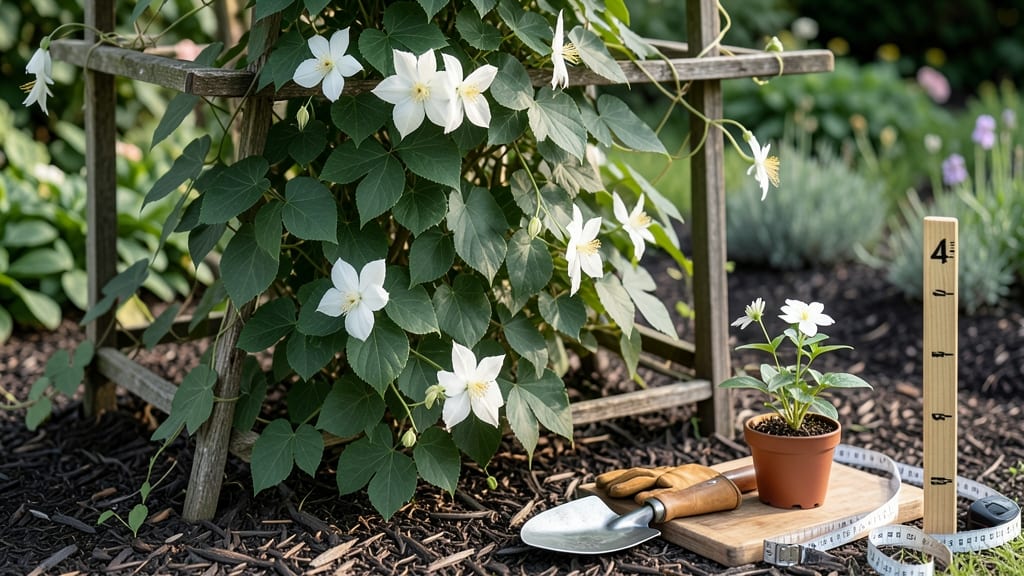
Planting clematis too far apart can leave your garden looking sparse, while crowding them risks weak vines and fewer blooms 🌸 — the sweet spot is all about balance.
If you’ve ever watched your clematis struggle to climb or seen powdery mildew creep in because vines were too close, you know spacing isn’t just about aesthetics. It’s the foundation for strong growth, airflow, and those show-stopping blooms you’re dreaming of.
Most gardeners overlook how variety matters—large-flowered clematis need 4-6 feet of space, while dwarf types thrive just 3 feet apart. I’ll walk you through the exact measurements, plus how to adjust if your garden’s too small (or too big) for the classic rules.
By the end, you’ll know not just how far to plant your clematis, but why—so your vines grow confidently, climb effortlessly, and reward you with blooms from summer into fall.

Ideal clematis spacing by vine type and growth habits
Clematis vines are stunning climbers, but their spacing needs vary dramatically based on type and growth habits. Planting too close risks disease outbreaks and weak stems, while spacing too far wastes garden space. The key is matching your clematis variety to its mature size and sunlight requirements.
Large-flowered clematis like 'Jackmanii' need ample airflow to prevent fungal issues, while evergreen types like 'Armandii' thrive in partial shade but require heavy-duty support. Understanding these differences ensures your vines grow strong and flower abundantly.
Proper spacing also affects how you train vines to trellises or arbors. Too little space creates tangled messes, while too much space leaves gaps that detract from your garden's visual impact. Let's break down the ideal distances for each clematis type.
| Clematis Type | Mature Spread | Recommended Spacing | Sunlight Needs | Support Structure | Key Considerations |
|---|---|---|---|---|---|
| Large-Flowered (e.g., 'Jackmanii', 'Niobe') | 6-10 ft | 4-6 ft apart (8-12 ft in full sun) | Full sun to partial shade | Strong trellis/arbor | Needs airflow to prevent mildew; prune annually |
| Herbaceous (e.g., 'Perle d'Azur', 'Hagley Hybrid') | 3-6 ft | 3-5 ft apart | Full sun to partial shade | Light to medium trellis | Die back in winter; plant near evergreens |
| Evergreen (e.g., 'Montana', 'Armandii') | 8-15 ft | 6-10 ft apart | Partial shade (protection from afternoon sun) | Heavy-duty trellis or wall | Slow-growing; plant in clusters for impact |
Large-flowered clematis, such as 'Jackmanii', reach 6-10 feet at maturity, so spacing them 4-6 feet apart prevents overcrowding. In full sun, increase spacing to 8-12 feet to reduce competition for light and water. These varieties need strong trellises to support their weight and encourage upward growth.
Herbaceous clematis, like 'Perle d'Azur', are more compact, typically 3-6 feet tall. Plant them 3-5 feet apart to allow airflow while maintaining a dense look. Since they die back in winter, pair them with evergreen shrubs for year-round interest.
Evergreen clematis, including 'Montana', are the largest, often 8-15 feet tall. Space these 6-10 feet apart and provide heavy-duty support like walls or sturdy trellises. Their slow growth means they'll fill in over time, so cluster 3-5 plants together for a dramatic effect.
Spacing also affects sunlight exposure, which is critical for flowering. Large-flowered clematis in full sun need extra space to avoid shading each other. Meanwhile, evergreen types prefer partial shade to protect their foliage from scorching.
Another key factor is airflow. Clematis are prone to powdery mildew when foliage stays damp. Proper spacing reduces humidity buildup, keeping your vines healthier. Always plant with the crown 2-3 inches below soil to prevent rot while ensuring roots have room to spread.
For container gardening, use dwarf varieties like 'Fascination' in pots 18+ inches deep. Space containers 2-3 feet apart to allow airflow. Train vines upward on a small trellis to maximize vertical space in urban gardens.
When planning your garden layout, consider seasonal interest. Pair early-flowering clematis with spring bulbs and late-season types with fall foliage plants. This creates a continuous display while keeping spacing efficient.
Finally, always measure your support structure before planting. A 6-foot trellis won't support a 10-foot clematis—choose structures that match your vine's mature size to avoid future struggles. With the right spacing, your clematis will thrive for years to come! 🌸
Common mistakes to avoid when planting clematis too close or too far
Getting clematis spacing wrong can turn your dream climbing garden into a maintenance nightmare. Too close, and you'll battle fungal diseases and weak stems. Too far apart, and your vines will stretch awkwardly while wasting precious garden space.
The key lies in understanding your specific clematis variety's growth habits and mature size.
I've seen beautiful gardens ruined by poor spacing—especially with large-flowered varieties like 'Jackmanii' that can spread 8-10 feet wide. The right distance ensures proper air circulation, prevents powdery mildew, and gives your vines room to thrive. Let's fix these common spacing mistakes before they become permanent problems.
⚠️ Warning: Clematis Spacing Mistakes That Kill Your Plants
Too Close: Planting clematis less than 3 feet apart creates a humid microclimate perfect for fungal diseases. Stems compete for nutrients, resulting in weak growth and fewer flowers. 'Niobe' varieties especially suffer from this.
Too Far: Spacing large clematis over 10 feet apart wastes space and encourages leggy growth as vines stretch for sunlight. Evergreens like 'Armandii' need careful planning to avoid sparse coverage.
Solution: Measure your mature plants' spread (check tags!) and space accordingly. For large-flowered types, aim for 4-6 feet in partial shade or 8-12 feet in full sun. Use dwarf varieties like 'Fascination' for tight spaces.
One of the biggest red flags is seeing yellowing leaves or black spots on clematis foliage. This often signals overcrowding creating poor airflow. Check your spacing by measuring between the outermost stems of mature plants—if they're touching, it's time to thin.
For large varieties, you should see at least 3-4 feet of clear space around each vine.
I recommend sketching your garden layout before planting. Place your clematis near their support structures (trellises, arbors) and mark the mature spread with stakes. This prevents the heartbreak of watching your beautiful vine outgrow its support or overshadow neighboring plants.
For evergreen clematis, consider planting in clusters of 3-5 to create a natural, lush look without excessive spacing.
Another common mistake is ignoring the sunlight requirements when spacing. Large-flowered clematis need full sun but require more space to prevent overcrowding, while evergreens prefer partial shade and can be planted closer together. Always match your spacing to both the variety's needs and your garden's light conditions.
A simple trick is to plant taller varieties at the back and shorter ones in front to maximize both space and sunlight exposure.
If you're working with an existing overcrowded planting, don't panic! You can transplant excess vines in early spring or fall when they're dormant. Dig carefully to preserve roots, and give your relocated clematis extra water for the first two weeks.
For sparse plantings, consider adding dwarf varieties or companion plants like heuchera or ferns to fill gaps while maintaining proper airflow.