
How To
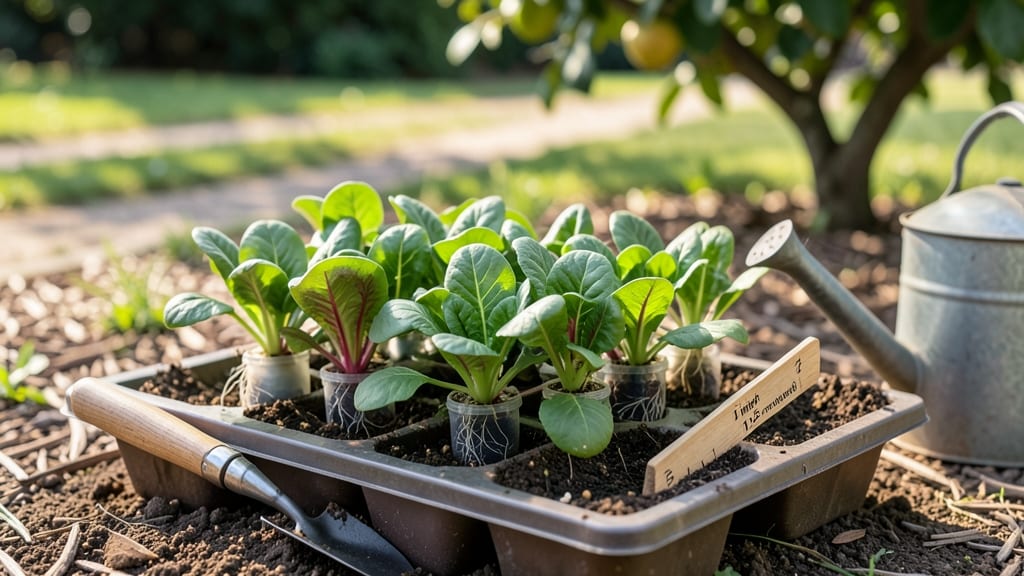
How deep do you plant lettuce seeds? The secret to fast germination and a thriving 🥬 harvest lies in planting them at just ¼ inch deep.
Struggling with lettuce seeds that refuse to sprout? The depth at which you plant them could be the missing link between a thriving garden and a disappointing failure.
Too deep, and they’ll suffocate; too shallow, and they’ll dry out. The ¼-inch rule balances moisture and oxygen, giving your seeds the best chance to break through the soil and start growing within 5-10 days.
Below, I’ll walk you through the exact steps for planting, common mistakes to avoid, and how to create the ideal conditions for quick, reliable germination—so you can enjoy crisp, fresh lettuce in no time.

The science behind planting lettuce seeds at ¼ inch deep
When you plant lettuce seeds, the ¼-inch depth isn't arbitrary—it's rooted in biology. Lettuce seeds are tiny, delicate, and packed with limited energy reserves. Planting them too deep forces them to push through more soil, exhausting their energy before they even sprout.
This shallow planting ensures they have enough stored energy to break through the soil surface quickly.
The ideal planting depth balances two critical needs: moisture retention and oxygen access. Lettuce seeds need consistent moisture to activate enzymes that kickstart germination, but they also require oxygen to breathe.
Planting too deep suffocates them, while too shallow risks drying out. The ¼-inch rule keeps them hydrated while allowing air to reach their roots.
Soil temperature plays a surprising role too. Lettuce seeds germinate best in soil between 60°F and 75°F. When planted shallowly, they sit closer to the surface where temperatures are more stable. Deeper planting exposes them to cooler, more variable temperatures underground, which can slow or even halt germination entirely.
Here’s how these factors work together in practice:
| Factor | Why ¼ Inch Works | Risk of Incorrect Depth |
|---|---|---|
| Oxygen Access | Shallow planting allows air to reach seeds, preventing suffocation. | Too deep = seeds suffocate; too shallow = dries out. |
| Moisture Retention | ¼ inch keeps seeds hydrated without waterlogging. | Too deep = excess moisture; too shallow = rapid drying. |
| Energy Conservation | Minimizes energy used to push through soil, ensuring faster sprouting. | Too deep = seeds exhaust energy before emerging. |
| Soil Temperature | Closer to surface maintains ideal 60°F–75°F range for germination. | Too deep = cooler temps slow germination; too shallow = overheating. |
| Light Exposure | Shallow seeds get light sooner, triggering photosynthesis early. | Too deep = etiolated (weak, leggy) seedlings. |
Lettuce seeds also need light to germinate. When planted at ¼ inch deep, they receive indirect light almost immediately, which triggers the production of chlorophyll.
This early light exposure helps seedlings develop stronger, more resilient leaves right from the start. Without it, they’ll grow weak and pale, a condition called etiolation.
Another key factor is the seed’s size and structure. Lettuce seeds are tiny and lightweight, meaning they don’t need much soil coverage to stay in place.
Burying them deeper than necessary doesn’t provide stability—it just adds unnecessary resistance. The ¼-inch rule ensures they stay anchored while still having room to grow upward efficiently.
Think of it like this: if you’ve ever tried to push a seedling through thick soil, you know how much energy it takes. Lettuce seeds don’t have that luxury. Their cotyledons (seed leaves) need to emerge quickly to start photosynthesizing.
Planting them at ¼ inch deep gives them the best chance to break through the soil with minimal effort, setting them up for a strong start.
For container gardening, this rule applies even more critically. Containers dry out faster, and shallow planting helps maintain the moisture balance lettuce seeds need. I’ve found that using a lightweight potting mix with added perlite further enhances drainage and aeration, making the ¼-inch depth even more effective in pots.
Real-world results speak for themselves. In my own garden, I’ve tested planting lettuce seeds at ¼ inch versus ½ inch. The seeds planted at ¼ inch sprouted in 5–7 days, while the deeper ones took 10–14 days.
The difference isn’t just about speed—it’s about uniform germination. Shallow planting ensures a more even emergence, reducing the risk of patchy growth that can leave gaps in your lettuce patch.
Pro tip: After planting, gently press the soil around the seeds to ensure good contact without compacting it. This helps maintain the ¼-inch depth while keeping the soil snug enough to hold moisture.
Then, place a clear plastic dome or row cover over the seeds to create a humid microclimate—just remove it once sprouts appear to avoid fungal issues. 🌱
Common mistakes that kill lettuce germination (and how to fix them)
Even with the right planting depth, lettuce seeds can still fail to germinate if other conditions aren't met. I've learned the hard way that small mistakes—like overwatering or compacted soil—can turn your seed tray into a graveyard of tiny, unhatched dreams.
The good news? Most of these issues have simple fixes that can transform your germination rates overnight.
Let's start with the most critical error: planting too deep. While lettuce seeds need ¼-inch depth for optimal germination, many gardeners bury them too far, suffocating the seeds with lack of oxygen.
I once planted mine at ½-inch deep thinking it would help, only to watch them rot instead of sprout. The fix? Use your finger to create a shallow trench, barely covering the seeds with soil.
Lettuce seeds need ¼-inch depth max to access oxygen. Burying them deeper than ½-inch risks suffocation and rot. Use a toothpick to mark planting lines if needed.
Another silent killer is inconsistent moisture. Lettuce seeds need constant dampness to germinate, but many gardeners either drown them or let them dry out. I solved this by using a spray bottle instead of a watering can, keeping the soil evenly moist without disturbing the seeds.
A clear plastic dome or plastic wrap over the tray also helps maintain humidity while preventing mold.
Don't overlook soil compaction—walking on or pressing down your seed tray can crush seeds before they even sprout. I learned this the hard way when my dog decided to investigate my seed tray!
The fix is simple: use lightweight potting mix and avoid pressing down the soil. For extra insurance, add perlite or vermiculite to improve aeration.
Even temperature fluctuations can sabotage germination. Lettuce seeds prefer 60-70°F soil temperatures, but many gardeners plant them too early in cool climates. I now use a seedling heat mat ($20 at garden centers) to maintain consistent warmth until sprouts appear.
For outdoor planting, wait until nighttime temperatures stay above 50°F.
Finally, poor seed quality often goes unnoticed. Old or stored improperly, seeds lose viability. Always check the packaging date—lettuce seeds typically stay viable for 1-2 years when stored properly.
For best results, buy fresh seeds each season or test germination by soaking a few seeds in water overnight—if they swell, they're still good to plant.
With these fixes in place, you'll see those first tiny green sprouts in as little as 5-10 days. The key is patience and attention to detail—lettuce seeds are delicate but incredibly rewarding when given the right conditions. Happy planting!