
Planting
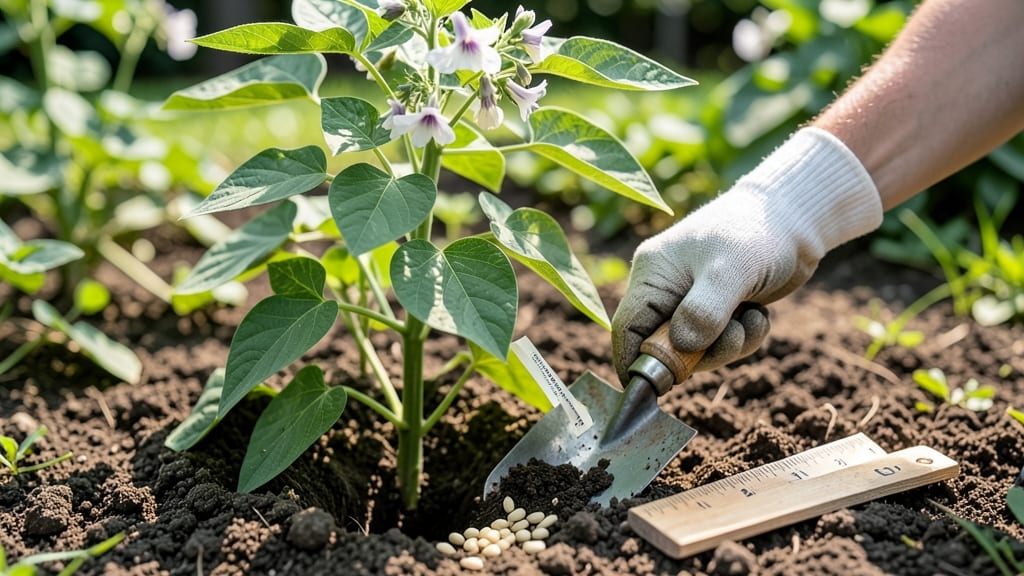
To plant bean seeds correctly, bury them 1 to 2 inches deep to promote quick sprouting and robust root growth, since they need darkness to germinate while avoiding excess moisture that causes rot. For sandy soils, you may need to plant slightly deeper than in clay-heavy soils.
Bean seeds thrive in darkness during germination, which is why planting them at the right depth is critical. 🌱 The ideal range of 1 to 2 inches balances protection from light exposure with proper air circulation—too shallow and they'll dry out, too deep and they risk suffocating or rotting.
I've found that bush beans often do best at the shallower end (around 1 inch), while pole beans with their longer taproots benefit from the deeper 1.5–2 inch range.
What's interesting is how soil type affects this. Sandy soils drain faster, so you might need to plant half an inch deeper to maintain consistent moisture, while clay soils can hold water better, allowing for slightly shallower planting.
Always loosen the soil before planting to prevent compaction, which can stunt root development.
💡 In This Article
- Optimal Bean Seed Planting Depth by Variety
- Signs of Over-Planting or Under-Planting Bean Seeds
Optimal bean seed planting depth by variety
Bean seeds need darkness to germinate, which is why depth matters so much. The 1-2 inch range creates a perfect balance—enough soil to block light while allowing roots to access moisture and nutrients.
For bush beans, which develop compact root systems, planting at 1 inch works best because their energy reserves are concentrated in a smaller seed coat. This shallow depth lets them break through quickly while their fibrous roots spread horizontally near the surface for stability.
Pole beans, with their longer taproots that can grow 6-10 feet deep, benefit from the 1.5-2 inch range. These varieties store more energy in their seeds to fuel downward growth, so they need slightly more soil coverage to prevent premature exposure to light.
Heirloom varieties often fall somewhere in between, with some needing 1.25 inches if they have intermediate root structures. The key is matching the planting depth to the seed's natural energy reserves and root development pattern.
Soil aeration plays a hidden role here. Compacted soil reduces oxygen flow to the seed, which can slow germination even at correct depths. Loosening the soil before planting creates tiny air pockets that help roots establish faster.
In sandy soils, where moisture drains quickly, planting half an inch deeper helps maintain consistent moisture levels during germination. Conversely, in clay-heavy soils, you can plant slightly shallower since water retention is less of a concern.
Temperature also interacts with depth. Bean seeds germinate best at 70-85°F, but cooler soils at 60°F require slightly deeper planting (1.5 inches) to maintain warmth near the seed. The soil acts like an insulator, protecting the seed from temperature fluctuations.
In hot climates, shallower planting (1 inch) helps prevent the seed bed from overheating, which can stunt early root growth.
Here's what happens when you get it wrong: Planting too shallow (0.5 inches) exposes seeds to light, causing them to produce weak, leggy stems that struggle to support the plant. Too deep (2.5+ inches) creates oxygen deprivation, leading to rot or failed germination.
The 1-2 inch range gives seeds just enough darkness to trigger germination while allowing roots to access the air and moisture they need to establish.
For visual reference, imagine a seed's energy reserves as a battery—bush beans have a AA battery (small capacity), while pole beans have a D battery (larger capacity).
The planting depth should match the battery size to ensure the seed has enough power to reach the surface before its energy runs out. 🌱