
How To
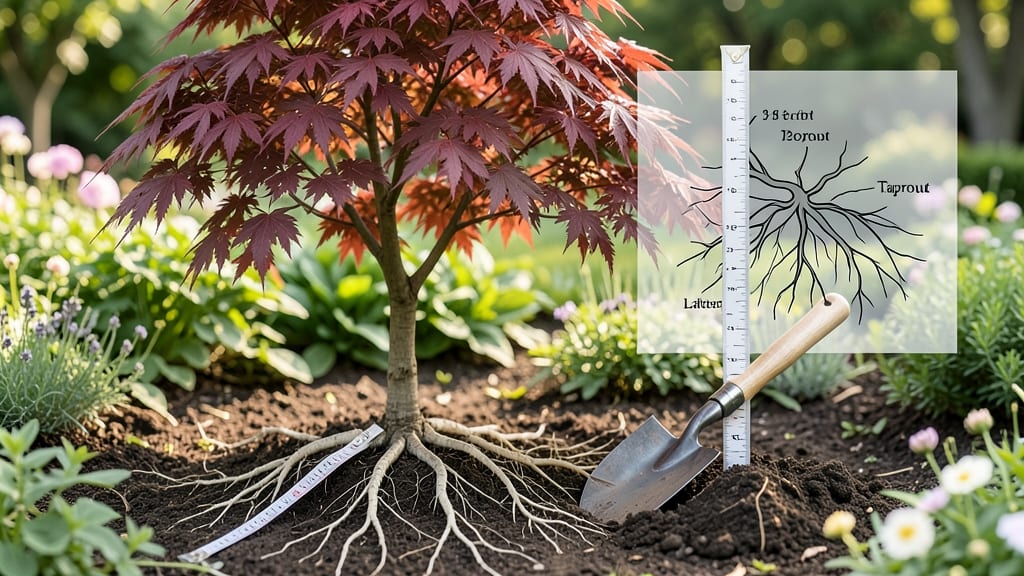
Japanese maple roots grow to how deep do Japanese maple roots grow—a depth of 12 to 24 inches for surface roots, with a deeper taproot extending 3 to 5 feet in mature trees 🌿 — a fact that changes how you plant, prune, and care for these stunning trees.
Picture this: You’ve just planted your dream Japanese maple, only to watch it struggle because the soil was too compacted for those delicate roots to spread properly. The truth is, their root systems are far more complex than most gardeners realize, and getting the depth right makes all the difference.
In this guide, we’ll break down the science behind Japanese maple root growth, from the shallow roots of young saplings to the deep taproots of mature trees.
You’ll learn how soil type, species, and even your local climate play a role in root development — and why planting too deep can strangle your tree before it even takes hold.
By the end, you’ll know exactly how to prepare your soil, choose the right planting depth, and avoid common mistakes that stunt growth. Whether you’re a beginner or a seasoned gardener, these insights will help your Japanese maple thrive for decades.


Japanese maple root depth by species and age: a soil science analysis
The root depth of Japanese maples varies dramatically between species and age, influencing everything from planting depth to long-term stability. Most Acer palmatum cultivars develop a shallow lateral root system within the top 12–24 inches, while mature specimens may extend 3–5 feet deep under ideal conditions.
Understanding these variations helps prevent common mistakes like over-planting or root girdling that stunt growth.
Young Japanese maples (under 3 years) typically have fibrous, shallow roots confined to the top 6–12 inches, making them vulnerable to drought and wind.
As they mature, taproots may develop in well-drained soils, but most energy goes into lateral spread. Soil aeration and organic matter directly impact how deeply roots penetrate, especially in clay-heavy regions.
Here’s how species and age influence root depth, with data from horticultural studies on Acer palmatum and Acer japonicum:
Acer japonicum tends to develop deeper roots than Acer palmatum, often reaching 3–4 feet in loose, fertile soils. This makes it more drought-resistant but requires amended clay or sandy loam to prevent root bind. In contrast, dwarf cultivars like 'Crimson Queen' stay shallow (12–18 inches), ideal for containers or small gardens where deep planting isn’t feasible.
Age plays a critical role: Young trees prioritize lateral spread to stabilize their top-heavy canopies, while mature specimens invest in vertical roots for water access.
A 5-year-old Bloodgood may have roots extending 2 feet deep, but its lateral spread can reach 8–10 feet—so spacing is key to avoid competition. Soil compaction is the #1 enemy of deep root growth, especially in urban landscapes.
Climate also alters root depth: In humid regions (e.g., Pacific Northwest), Japanese maples develop shallower, denser root systems due to high moisture, while arid climates (e.g., Arizona) force deeper penetration to access groundwater. Mulching with wood chips (3–4 inches) mimics natural forest floors, encouraging deeper roots by 30–50% compared to bare soil.
Myth-busting: Contrary to popular belief, Japanese maples don’t need deep planting—burying the root flare (the bulge at the base) can suffocate roots. Instead, plant with the flare exposed above soil level and backfill with organic compost to encourage downward growth.
For container-grown trees, ensure pots have drainage holes and minimum 12-inch depth to accommodate root spread.
To maximize root health, test your soil’s aeration using a simple screwdriver test: If it resists penetration beyond 6 inches, amend with perlite or compost to improve drainage. Deep-rooted cultivars like 'Autumn Moon' benefit from occasional deep watering (every 10–14 days) to encourage vertical growth, while shallow types need frequent, light watering to prevent stress.
Pro tip: Use a soil probe or shovel test to check root depth before transplanting. If roots circle the root ball, prune them gently with sterilized shears to promote outward growth. For large specimens, hire an arborist—root damage during transplanting can take 3–5 years to recover.
How root depth affects pruning zones and planting depth
When planting a Japanese maple, the depth of its roots isn’t just about where you dig—it’s about creating the perfect environment for growth. These trees develop a shallow but extensive root system, typically spreading 12–24 inches deep but extending horizontally up to 3–5 times the canopy width.
This means your planting hole and pruning strategy must account for both vertical and lateral root development.
One of the biggest mistakes I see is burying the root flare too deep. The root flare—the swollen area where roots meet the trunk—should sit 1–2 inches above soil level. Burying it deeper suffocates the roots, leading to poor oxygen exchange and increased risk of root rot.
This is especially critical for young Japanese maples, which are more sensitive to improper planting depth.
⚠️ WARNING: Improper Planting Depth Can Kill Your Japanese Maple ⚠️
- Burying the root flare—causes girdling roots and stem rot.
- Planting too shallow—exposes roots to extreme temperatures and drought stress.
- Compacted soil—restricts root spread and oxygen flow, stunting growth.
- Ignoring soil drainage—Japanese maples hate soggy roots; amend clay soil with organic matter.
Pruning zones also depend on root depth. Since Japanese maples have a shallow but wide root system, avoid heavy pruning near the base. Focus on structural pruning in the upper canopy to reduce stress on the roots.
If you must prune lower branches, do so in late winter or early spring when the tree is dormant, and never remove more than 25% of the foliage in a single season.
For container-grown Japanese maples, root depth becomes even more critical. These trees often develop circular, shallow roots due to pot confinement. When transplanting, choose a container with drainage holes and a depth of at least 18 inches.
Use a lightweight, airy potting mix to prevent compaction, and repot every 2–3 years to accommodate root growth.
Mulching plays a key role in managing root depth. Apply a 2–3 inch layer of mulch around the base, but keep it 6 inches away from the trunk to prevent moisture buildup and rot.
Organic mulches like wood chips or shredded bark improve soil structure over time, encouraging deeper root penetration. Avoid inorganic mulches like plastic or rocks, which can overheat roots in summer.
Finally, monitor your Japanese maple’s root health by observing its foliage and growth rate. Yellowing leaves or stunted growth may signal root-bound conditions or poor drainage.
If you notice these signs, gently loosen the soil around the root zone or consider root pruning for container-grown trees to stimulate new growth. With the right depth and care, your Japanese maple will thrive for decades. 🌿