Planting
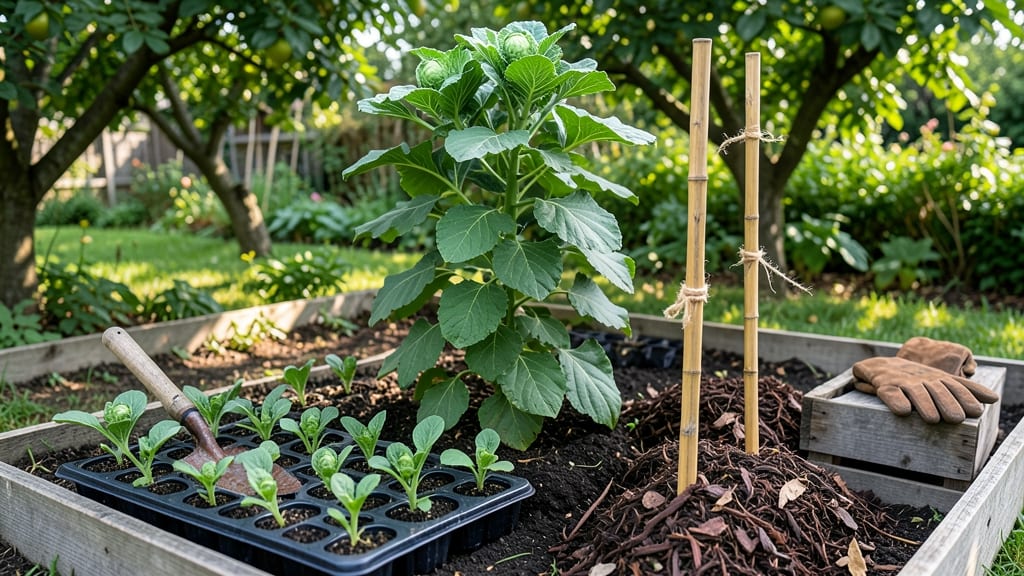
Brussels sprouts thrive when planted 8-10 weeks before your first fall frost—that’s the secret to sweet, tender harvests. 🌱 I’ve learned the hard way that timing is everything: plant too early, and they bolt in summer heat; too late, and they won’t mature before winter.
The key is cool weather—think 60-75°F days and 50-60°F nights—for those signature flavorful buds.
For most gardeners, that means mid-to-late summer planting in zones 3-7, but warmer climates need a different approach. Start seeds indoors 6-8 weeks before transplanting to give them a head start, or choose heat-tolerant varieties like ‘Long Island Improved’ if you’re pushing the season.
Even in short-season areas, you can squeeze in a second crop by planting early spring for a fall harvest.
What you’ll end up with is a neat, bushy plant producing tight, flavorful sprouts from the bottom up. The first buds form near the base when days grow shorter—usually 80-100 days after transplanting—and you’ll keep harvesting until hard frost.
Nothing beats the taste of homegrown Brussels sprouts, especially when you’ve timed it just right.
Here’s where it gets interesting: in hotter zones, shade cloth and extra water can extend the growing window, while mulching protects roots from temperature swings. And don’t fall for the myth that Brussels sprouts need full sun—partial shade in peak summer actually improves flavor.
The goal is to keep them cool and happy until harvest.
📚 In This Guide
- What you need
- Instructions
- Tips and common mistakes
- Wrapping up and next steps
What you need
- ● Brussel sprouts seeds: Choose frost-hardy varieties like 'Long Island Improved' or 'Jade Cross' (1–2 oz packet covers ~25–50 plants).
- ● Seed-starting mix: 1–2 quarts of sterile, well-draining potting soil (or coconut coir).
- ● Containers or seed trays: 2–4" deep pots (or a seed tray with cell inserts) for seedlings.
- ● Garden soil: Rich, well-draining loam (amend with compost if needed).
- ● Fertilizer: Balanced organic fertilizer (e.g., 10-10-10) or compost (1–2 cups per planting hole).
- ● Mulch: Straw or shredded leaves (2–3 inches thick) to retain moisture.
- ● Hand trowel or transplanting spade (for digging small holes).
- ● Garden gloves (to protect your hands from soil and thorns).
- ● Watering can or hose with a gentle spray nozzle (avoid blasting seedlings!).
- ● Ruler or measuring tape (for spacing seedlings 18–24" apart).
- ○ Row cover or frost cloth (optional, for early/late planting in cold climates).
- ● Full sun location: At least 6–8 hours of sunlight daily.
- ● Soil temperature: Wait until soil is at least 45°F (7°C) (use a soil thermometer if unsure).
- ● Frost-free window: Plant 2–3 weeks before your last frost date (or start indoors 6–8 weeks early).
- ● pH test: Aim for slightly acidic soil (pH 6.0–7.0); adjust with lime or sulfur if needed.
Instructions for timing brussel sprouts planting by frost-free Zone
Here's how to calculate your ideal planting windows for maximum harvest success.
📅 Step 1: Determine Your Frost-Free Zone and Last Spring Frost Date
First, identify your USDA frost-free zone (find yours using the USDA Plant Hardiness Zone Map) and locate your average last spring frost date. I always check my local cooperative extension service website for precise dates—these vary by 1-2 weeks even between neighboring towns. For example, Zone 5 typically sees last frosts between April 15-30, while Zone 8 ranges from March 1-15.
Write down your last frost date and first frost date—these are your planting anchors. Real talk: If you're in a microclimate (like a valley or hillside), your frost dates may differ by 2-3 weeks from the general zone average. I've seen this firsthand in my own garden where the bottom of the slope frosts a week later than the top.
🌱 Step 2: Calculate Your Two Planting Windows
Brussel sprouts thrive with cool weather, so you'll plant twice: once in early spring (4-6 weeks before your last frost) and again in mid-summer (8-10 weeks before your first frost). For Zone 6, that means planting March 15-April 1 for spring and July 15-August 1 for fall. The reason we plant twice is that cool temperatures after 70°F prevent sprouts from forming properly.
Here's the thing—if you're in Zone 9 or warmer, skip the spring planting entirely. The heat will stress seedlings before they establish. Instead, focus on the fall window and consider using shade cloth during summer to protect young plants from excessive heat.
☀️ Step 3: Prepare the Soil and Plant at Optimal Temperatures
Brussel sprouts love rich, well-draining soil with a pH between 6.0-7.0. Work in 2-3 inches of compost at planting time and ensure the soil temperature is at least 45°F—cold soil delays germination. I always test soil temp with a simple soil thermometer; anything below 40°F will leave you waiting weeks for sprouts.
Plant seeds ½ inch deep and 1½ inches apart in rows 2 feet apart. Thin seedlings to 18 inches apart when they're 4 inches tall—this gives plants room to develop strong stems. Here's where it gets fun: Watch for first true leaves (the second set after the initial seed leaves) to appear in 7-14 days at optimal temperatures.
⏰ Step 4: Monitor Growth and Adjust for Seasonal Changes
Spring-planted sprouts will mature in 85-95 days, while fall crops take 90-100 days. The key is to harvest before hard frosts hit—sprouts actually sweeten when exposed to light frost, but the plants won't survive prolonged freezing. I always mark my calendar 2 weeks before first frost to start harvesting the top sprouts first.
Watch for yellowing lower leaves—this is normal as the plant matures, but if it spreads upward, your plants need more phosphorus. Side-dress with compost tea or a balanced fertilizer at half-strength when plants are 6 inches tall. Don't overwater now; soggy soil invites rot in the dense sprouts.
✂️ Step 5: Harvest Strategically for Continuous Yield
The moment that matters: Harvest begins when the bottom sprouts reach 1 inch in diameter. Use a sharp knife to cut individual sprouts, leaving ½ inch of stem attached. This encourages more sprouts to form up the stalk. I harvest every 2-3 days during peak season to keep production going—once you start, you'll get hooked on the rhythm.
Stop harvesting 2 weeks before first frost to let remaining sprouts mature fully. The ones left on the stalk will develop their best flavor after exposure to 20-25°F temperatures. Don't skip this—frost-sweetened sprouts taste like nothing else. After harvest, cut stalks to 6 inches and compost the remaining plant matter.
Tips & tricks for perfect brussel sprouts planting timing
Avoid these common pitfalls—and how to sidestep every one when planning your frost-free zone harvest.
Microclimate Reality Check: The USDA zone map gives you a starting point, but your actual frost dates can vary dramatically. I've seen neighbors with identical zones experience last frosts two weeks apart due to elevation or water bodies. To nail it, observe your garden for three years and record actual frost dates—this is more accurate than any map. For example, if Zone 6's average last frost is April 15, but your valley bottom frosts consistently on April 22, adjust your planting window accordingly.
Soil Temperature Secret: That 45°F minimum soil temperature isn't just a suggestion—it's the difference between germination in 7 days and waiting 3 weeks for stubborn seeds. I use a simple soil thermometer (under $10) to check morning temperatures. If it's below 40°F, cover your beds with black plastic for 3-5 days to warm the soil naturally. This simple step prevents the most common beginner frustration with delayed sprouting.
Fertilizer Timing Strategy: The instructions mention side-dressing with compost tea at 6 inches, but here's what nobody tells you—too much nitrogen now will give you leafy growth at the expense of sprouts. I use a 5-10-10 fertilizer ratio instead (half-strength) when plants hit 6 inches, focusing on phosphorus to encourage bud development. The key is to stop fertilizing 4 weeks before harvest to avoid bitter flavors.
Harvest Rhythm Mastery: Those 2-3 day intervals between harvests might seem frequent, but here's why it works: Brussel sprouts continue growing after you start harvesting. By cutting every 2-3 days during peak season, you're essentially "pruning" the plant to encourage more bud formation. I set a phone reminder for harvest day and time—consistency is everything. Pro tip: Harvest in the morning when sprouts are crispest, and use a sharp knife to avoid damaging the stalk.
Pro Tips for Brussel Sprouts Planting Time
- Avoid these common pitfalls—and how to sidestep every one when planning your frost-free zone harvest.
- Microclimate Reality Check: The USDA zone map gives you a starting point, but your actual frost dates can vary dramat...
- Soil Temperature Secret: That 45°F minimum soil temperature isn't just a suggestion—it's the difference between germi...
Frequently asked questions
Got questions about planting Brussels sprouts? You’re in the right place!
Here are the most common queries—plus straightforward answers—to help you grow a thriving crop.
When is the best time to plant Brussels sprouts?
Brussels sprouts thrive in cool weather, so plant them 8–10 weeks before the first frost in spring (typically March–April in most U.S. zones) or 60–90 days before the first hard frost in fall (August–September). For year-round harvests, succession plant every 2–3 weeks!
Can I plant Brussels sprouts in late summer?
Late summer (August–September) is a great time for fall planting. Just ensure they mature before temperatures drop below 20°F (-7°C). In warm climates, opt for late-maturing varieties like ‘Long Island Improved’ to avoid heat stress.
What if I miss the planting window?
Don’t panic! If you miss spring/fall, try container gardening—Brussels sprouts grow well in pots with at least 12 inches of depth. Move containers indoors during extreme heat/cold (e.g., a garage or cold frame) and return them to outdoor conditions when stable.
Why are my Brussels sprouts bolting or flowering early?
Bolting (premature flowering) usually happens due to heat stress, drought, or overcrowding. To prevent it:
- Water deeply (1–2 inches per week).
- Use shade cloth (30–50%) in summer.
- Choose heat-tolerant varieties like ‘Ruby Ball’ or ‘Coronet.’
How do I know when Brussels sprouts are ready to harvest?
Harvest when sprouts are 1–2 inches wide and tightly packed, usually 90–120 days after planting. Start with the bottom buds and work upward, leaving the top few for last. Frost sweetens the flavor, so don’t rush—wait until temps dip to 25–30°F (-4°C to -1°C) for extra richness!
Pro Tip:
Need a quick reference? Bookmark this USDA Plant Hardiness Zone Map to check your local frost dates. Happy planting!
Wrapping up and next steps
Planting Brussels sprouts at the right time—whether in early spring or late summer—sets the stage for a bountiful, flavorful harvest. 🌱 With the right soil, spacing, and care, you’ll enjoy homegrown veggies that rival store-bought (and taste even better!).
Now that you’re armed with timing tips, grab those seeds, get your hands dirty, and watch your garden flourish.
Ready to take the next step? Start small—try a few plants in containers or a small plot—and experiment with varieties to find your favorite. Happy growing! 🌿