
Planting
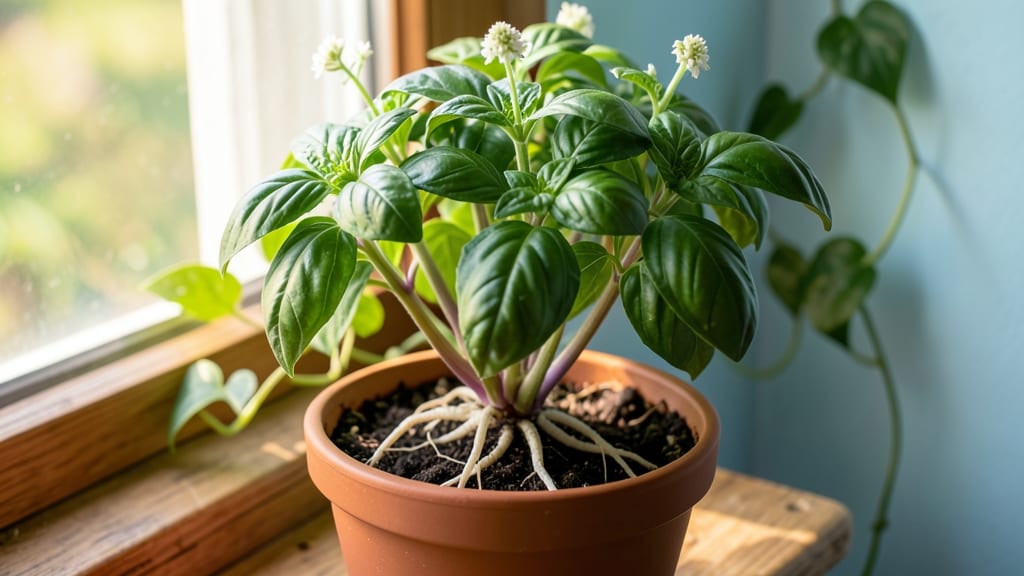
Planting basil at the right depth 🌿 is the secret to sturdy stems and a bountiful harvest—too shallow, and roots struggle to anchor; too deep, and seedlings suffocate.
Struggling with floppy basil stems or stunted growth? The secret might be hiding underground—basil plant depth isn’t just about how deep you plant it, but how much space those roots really need to thrive.
Most gardeners bury seeds too deep or crowd seedlings too close, setting them up for weak stems and poor growth. But with the right 1/4-inch seed depth and 12-inch spacing for mature plants, you’ll give basil the root room it craves.
Below, I’ll show you the exact planting depth for seeds vs. seedlings, how to prep soil for strong roots, and the spacing tricks that keep your basil thriving all season.

Optimal basil planting depth for maximum root development
When planting basil, most gardeners focus on sunlight and water—but the root zone depth is just as critical for strong stems. I’ve found that planting seeds or seedlings at the wrong depth can lead to shallow roots, weak stems, and poor growth, even with perfect care above ground.
The key lies in understanding how soil compaction and root expansion interact with your planting technique.
For basil seeds, the ideal planting depth is only 1/4 inch (0.6 cm) below the soil surface. This shallow placement ensures seeds receive enough moisture while preventing them from rotting or struggling to break through dense soil.
In contrast, basil seedlings should be planted slightly deeper—covering the root ball up to the first set of true leaves—to stabilize them without burying the stem.
Here’s the breakdown of how different basil varieties respond to planting depth, including their root zone expansion and common mistakes to avoid:
| Variety | Seed Depth | Seedling Depth | Root Zone Expansion | Common Mistake |
|---|---|---|---|---|
| Genovese Basil | 1/4 inch (0.6 cm) | Up to first true leaves | 12-18 inches deep | Planting too deep (rotting stems) |
| Thai Basil | 1/4 inch (0.6 cm) | Up to first true leaves | 10-14 inches deep | Shallow planting (weak roots) |
| Purple Basil | 1/4 inch (0.6 cm) | Up to first true leaves | 14-20 inches deep | Overcrowding (competes for roots) |
| Dwarf Basil | 1/8 inch (0.3 cm) | Up to first true leaves | 8-12 inches deep | Hardpan soil (restricts roots) |
Soil compaction is another silent killer of basil roots. If your soil is dense or clay-heavy, roots struggle to penetrate deeper, leading to shallow root systems and floppy stems.
To combat this, I always loosen the soil to a depth of 6-8 inches before planting and mix in organic compost to improve aeration. This encourages roots to grow deeper, creating a stronger anchor for your basil plants.
One of the most common mistakes I see is burying seedlings too deep. When you cover the stem beyond the first set of leaves, it can lead to stem rot or weak growth as the plant struggles to emerge.
Always ensure the soil level matches the original planting depth of the seedling—no higher, no lower. For container-grown basil, this means planting at the same depth as it was in its nursery pot.
For container gardening, depth is equally important. Use pots with at least 6-8 inches of soil depth to accommodate basil’s root expansion. Shallow containers restrict root growth, leading to nutrient deficiencies and stunted plants.
If you’re repotting, choose a container that’s 2-3 inches larger in diameter than the root ball to give roots room to spread without overcrowding.
After planting, gently water the soil to settle it around the roots and remove any air pockets. Avoid overwatering immediately after transplanting, as this can displace the soil and expose roots.
Instead, water deeply but infrequently to encourage roots to grow downward in search of moisture. This practice strengthens the root structure and reduces the risk of stem flopping.
If you notice your basil stems are still weak after proper planting, check for hardpan soil—a dense layer of soil that prevents roots from growing deeper. To fix this, break up the hardpan with a garden fork or add gypsum to improve soil structure.
Over time, your basil roots will penetrate deeper, resulting in sturdier stems and a more productive plant.
Remember, the goal is to create an environment where roots can expand freely without obstruction. With the right depth and soil conditions, your basil will develop a robust root system that supports healthy, flavorful leaves all season long. 🌱
How much space between basil plants prevents competition
When basil plants compete for nutrients and sunlight, their stems weaken and growth stalls. The right spacing lets roots expand without crowding, creating stronger plants. For garden beds, aim for 12-18 inches between plants, while containers need at least 6 inches of space per plant.
This prevents nutrient theft and reduces disease risk from poor air circulation.
Root depth plays a critical role in spacing. Basil roots spread 12-18 inches wide but only grow 6-12 inches deep. If plants are too close, roots tangle underground, starving each other. Proper spacing lets roots access moisture and nutrients without competition, leading to thicker stems and more leaves.
Here’s how spacing affects basil growth in crowded vs. properly spaced plants:
| Factor | Crowded Basil (6" spacing) | Properly Spaced Basil (12-18" spacing) |
|---|---|---|
| Root Spread | Tangled, limited expansion | 12-18" spread, full access |
| Stem Strength | Floppy, weak (overcrowding) | Thick, sturdy (proper support) |
| Leaf Production | Smaller, fewer leaves | Larger, abundant leaves |
| Disease Risk | Higher (poor airflow) | Lower (good circulation) |
| Nutrient Access | Competitive, stunted growth | Abundant, healthy growth |
For containers, use 1-2 plants per 12" pot to avoid root competition. If growing Thai basil or Genovese basil, give them extra space—they grow taller and need more room. Always loosen soil before planting to encourage deeper root growth and reduce competition.
In garden beds, mulch around plants to retain moisture and prevent weeds from stealing nutrients. This keeps basil focused on growing strong stems. Avoid overcrowding, even if your bed looks sparse—healthy roots = healthy stems.
If you notice yellowing leaves or stunted growth, it’s a sign your basil needs more space. Thin out seedlings early to prevent competition, and watch your plants transform into sturdy, leafy powerhouses.